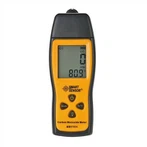
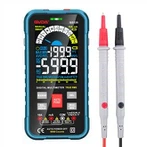
Points to note for annual calibration of clamp meters
Current clamp meters measure current by non-contact means, making it safer and easier to obtain measurements. Current clamps often have additional measurement capabilities such as voltage and on-off. Clamp meters typically require annual calibration to ensure that they meet the manufacturer's specifications.
Here are 7 important factors to consider when calibrating a clamp meter:
1. Clamp meters come in a wide variety of shapes and sizes.
The jaw size design makes the calibration process difficult and requires the selection of appropriate calibration equipment.
2. Most of today's clamp meters are multifunctional.
In addition to current, most clamp-on meters can generally measure voltage, resistance, on/off, and other functions common to digital multimeters.
3. Not all calibrators are up to the job.
At higher outputs, many calibrators limit continuous output to high currents. In addition, you must use a calibrator that is accurate enough and has a compliance voltage sufficient to drive the coil. Fluke uses "L-COMP" (inductive compensation) to increase the compliance voltage to drive inductive loads.
Coil inductance can cause faults, so avoid current sources not designed for current coils. Transients when switching the current on and off may cause the current source to trip.
4. Current coil winding (turns) and range are very important.
The number of turns of the coil used must be sufficient to test the entire current range of the current clamp. The coil winding determines the amount of current flow. For example, a calibrator with 50 turns and an output of 20 A will show a maximum of 1,000 A on the clamp meter.
5. Don't overlook accessories. Some clamp meters may come with flexible current probes, such as the Fluke iFlex, which must be calibrated with the clamp meter.
6. High currents generate heat.
Current coils must be designed to dissipate as much heat as possible. Coils usually have a maximum operating time specification at higher currents.
7. Positioning is very important.
When aligning the clamp meter with the current coil, pay attention to the current clamp stray field and position sensitivity. Avoid interference fields from other equipment and current leads. Note the clamp meter alignment marks. Align the axis of the clamp meter parallel to the coil axis and align the jaw plane perpendicular to the coil leads.