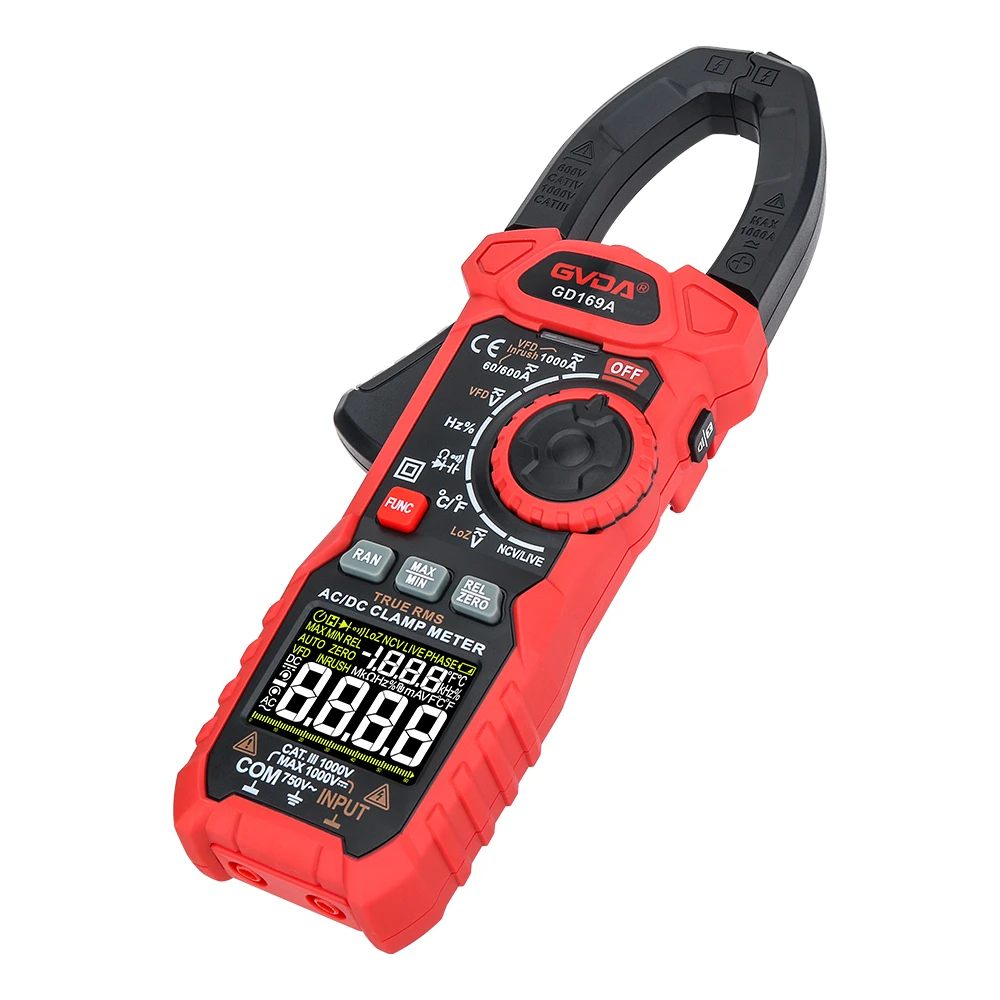
1. Before using the digital multimeter, read the instruction manual carefully to be familiar with the power switch function and the function of the limit switch, input jack, user jack, and various function keys, knobs, and accessories. In addition, you should also understand the limit parameters of the multimeter, the characteristics of overload display, polarity display, low voltage display and other indicator displays and alarms, and master the change rule of the decimal point position. Before measuring, carefully check whether the test leads are cracked, whether the insulation layer of the leads is damaged, and whether the test leads are inserted correctly to ensure the safety of the operator.
2. Before each measurement, check again whether the measurement item and the limit switch are in the correct position, and whether the input jack (or special socket) is selected correctly.
3. The meter will appear jumping number phenomenon when measuring, should wait for the displayed value to stabilize before reading.
4. Although there is a relatively complete protection circuit inside the digital multimeter, it is still necessary to avoid misoperations in operation. For example, use the current to block the voltage, use the electricity to block the voltage or current, and use the capacitor to block the charged voltage. capacitors, etc., so as not to damage the meter.
5. If only the highest digit displays the number "1", and other digits are blanked, it proves that the meter has been overloaded, and a higher limit should be selected.
6. It is forbidden to move the limit switch when measuring the voltage above 100V or the current above 0.5A, so as to avoid arcing and burning the contacts of the transfer switch.
7. The number marked with the danger mark next to the input jack represents the limit value of the input voltage or current of the jack. Once exceeded, it may damage the instrument and even endanger the safety of the operator.
8. The clamp multimeter is not allowed to measure the current of the high-voltage line, and the voltage of the line under test cannot exceed the voltage level specified by the clamp meter (generally more than 500 volts) to prevent insulation breakdown and personal electric shock.
9. The measurement should estimate the size of the current to be measured, select the appropriate range, and do not use the small range gear to measure the large current.
10. Before measuring, you should turn the range switch to the corresponding AC current gear. You cannot use the voltage gear and resistance gear to measure the current. Remember! Never use the resistance gear and the current gear to measure the voltage, otherwise, if you are not careful, the meter will be burned.
11. Only one wire can be clamped in each measurement. When measuring, the conductor under test should be placed in the center of the jaw to improve the accuracy of the measurement. It is best to flatten the watch body with your hand, and try not to let the wires rest on the jaws and the watch body.
12. After the measurement, the range switch must be rotated to the maximum voltage range position, and then the power switch must be turned off to ensure safe use next time.