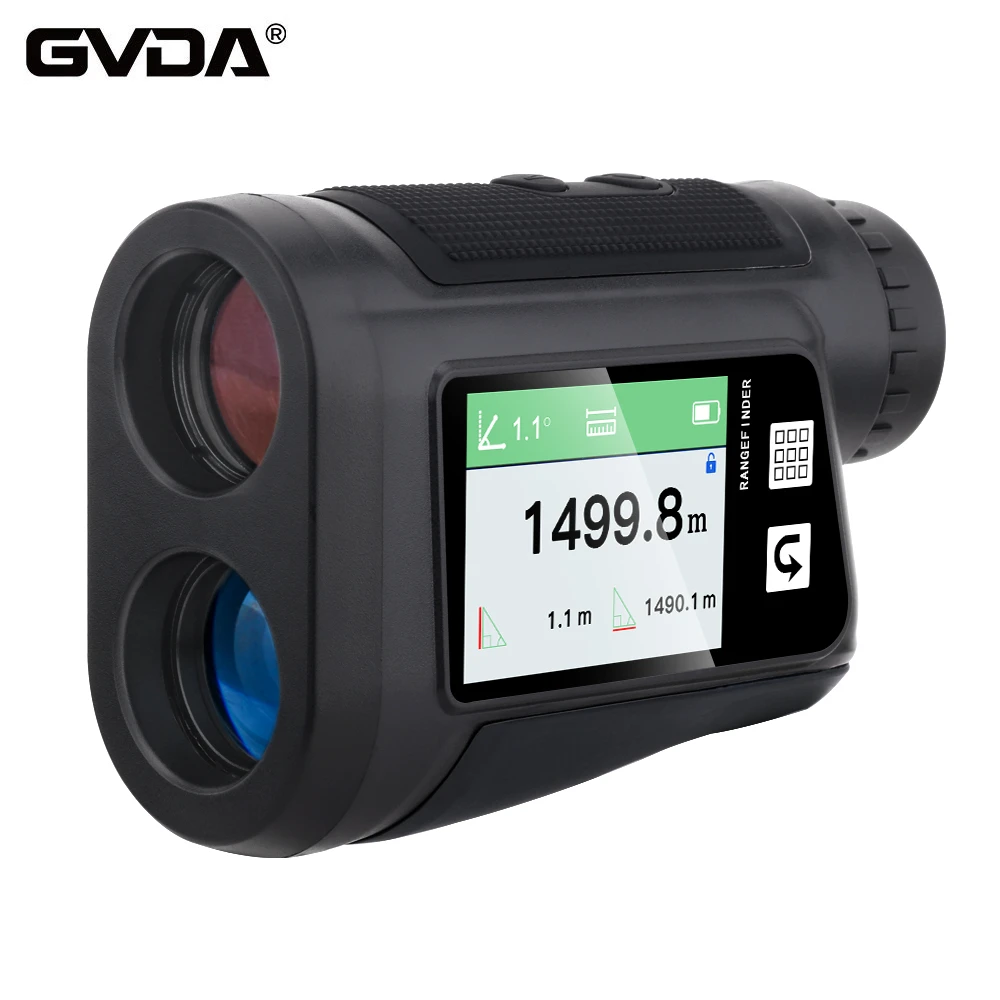
Principle and features of the handheld high-precision telescopic laser rangefinder
The two main methods used by laser range finders to determine distance are the pulse method and the phase approach. The pulse technique of ranging works as follows: the range finder emits, the target object reflects the laser back to the range finder, which then receives it and simultaneously records the laser's time back and forth. The distance between the rangefinder and the object being measured is half of the product of the speed of light and the round-trip time. By using the pulse method, distances are typically measured with an accuracy of +/-1 meter. Additionally, this sort of rangefinder often has a measuring blind zone of between 5 and 15 meters.
Semiconductor lasers with wavelengths of 905 nm and 1540 nm are used in the instrument. We refer to the 905nm and 1540nm laser rangefinders as "safe." YAG laser working at a 1064 nm wavelength. The wavelength of 1064 nanometers is dangerous for human skin and eyes, especially if the eyes unintentionally come into contact with the laser. Serious eye damage may result. Therefore, the 1064 nanometer laser in handheld laser rangefinders is entirely outlawed in other nations. Some producers of 1064nm laser range finders are located in China. We refer to the 1064nm laser range finder as "unsafe" since it may be damaging to humans.