Principles, Standards and Practical Applications of Infrared Thermometers
Non-contact temperature measurement with infrared thermometers offers numerous advantages. Its application scope covers tiny or hard-to-access objects, corrosive chemicals, and sensitive surface materials. This article discusses these advantages, explains the key criteria for proper infrared thermometer selection, and describes its application fields.
Due to atomic and molecular motion, all objects radiate electromagnetic waves. The most critical wavelength range for non-contact temperature measurement is 0.2 to 2.0 μm. The natural radiation within this band is defined as thermal radiation, or infrared rays.
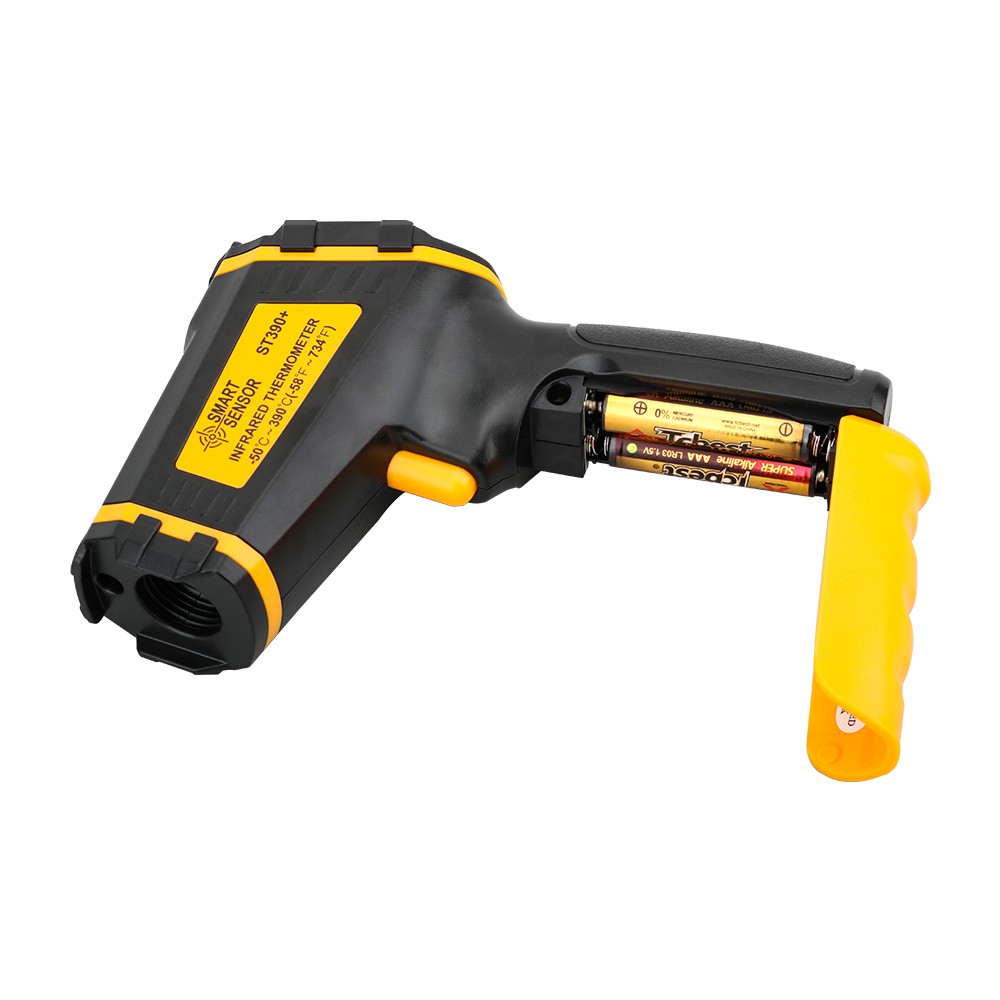
Instruments that measure temperature by detecting infrared radiation emitted from measured objects are defined as radiation thermometers, radiant temperature meters, or infrared thermometers in accordance with German Industrial Standard DIN 16160. These terms also apply to devices that measure temperature based on visible radiant rays emitted by targets and calculate temperature from the spectral radiation density.
Advantages of Temperature Measurement with Infrared Thermometers
Non-contact temperature measurement, which operates by capturing infrared radiation from measured surfaces, provides considerable benefits. It enables effortless temperature detection of inaccessible or moving objects, as well as materials with poor thermal conductivity or low heat capacity.
Infrared thermometers feature an ultra-short response time, allowing rapid adjustment and closed-loop control. With no wearable components, they require no recurring maintenance costs common to contact thermometers.
Especially for miniature targets, contact measurement causes significant errors due to heat conduction interference, while infrared measurement eliminates this issue. It is also fully applicable to corrosive chemicals and delicate surfaces, such as coatings, paper, and plastic films. Long-distance remote measurement keeps operators away from hazardous areas and ensures operational safety.