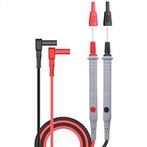
Problems commonly encountered when using coating thickness probes
When repairing the coating thickness gauge probe, it is often found that the magnetic core is severely worn, and some can be said to be seriously damaged. For example, the gem core of the N1 head is often damaged and chipped, and the arc core of the F1 head magnetic core is flattened or deformed.
First of all, it is normal for the probe to be worn during use. But if the user pays attention according to its characteristics, its service life will be extended.
A common problem is that when measuring, since the test is usually done downward, the user often presses downward harder, which can easily cause the failure of the probe core over time. The correct way to use it is to gently press the probe against the measured surface when it is one centimeter away from the workpiece to be measured. Because the probe has a built-in induction pressure spring during design, you only need to press it gently. Another point is that during repeated movement of the probe, it is easy to bump, collide, and collide with other objects, and it is also easy to cause damage to the probe. Therefore, if the working conditions permit, the probe can be fixed and the workpiece to be measured can be brought into contact with the probe, thereby Reduce probe collision.
In another case, when measuring, whenever you measure a point, you must lift the probe and not pull it flat to reduce core wear.
Finally, the probe must be kept away from strong magnetic fields to avoid changing the natural frequency of the probe and causing it to fail to work. Correct operation and usage will extend the service life of the instrument.