Proper Calibration of pH Meters
There are many types of pH meters due to the different designs of the electric meters, and their operating steps are different. Therefore, the operation of the pH meter should be carried out strictly in accordance with its instruction manual. In specific operations, calibration is an important step in the operation of pH meters. The data in Table 1 are the measured values of the uncalibrated and calibrated pH meters with an accuracy of 0.01 grade and passed the metrological verification, from which we can see the importance of calibration.
Standard pH ┄┄┄ Error before calibration (pH) ┄┄┄ Error after calibration (pH)

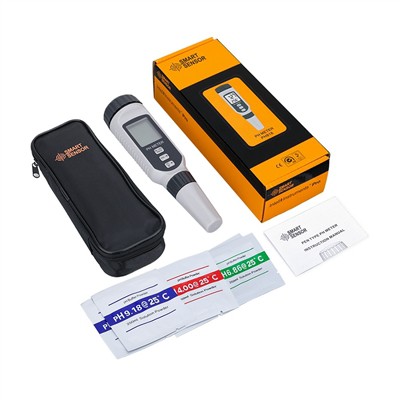
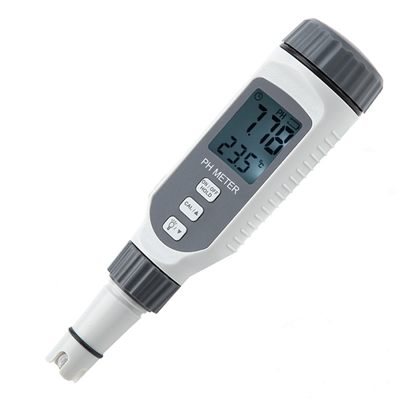
Although there are many types of pH meters, their calibration methods all use the two-point calibration method, that is, two standard buffers are selected: one is the pH7 standard buffer, and the second is the pH9 standard buffer or the pH4 standard buffer. First use the pH7 standard buffer solution to position the electrometer, and then select the second standard buffer solution according to the acidity and alkalinity of the solution to be tested. If the solution to be tested is acidic, then select the pH4 standard buffer for use; if the solution to be tested is alkaline, then select the pH9 standard buffer for use. If it is a manually adjusted pH meter, it should be operated several times between the two standard buffer solutions until it is no longer necessary to adjust its zero point and positioning (slope) knobs, and the pH meter can accurately display the pH values of the two standard buffer solutions. Then the calibration process ends. Thereafter, the zero and positioning knobs should not be moved during the measurement. If it is an intelligent pH meter, it does not need to be adjusted repeatedly, because it has stored the pH values of several standard buffer solutions for selection, and can be automatically identified and calibrated automatically. But pay attention to the selection of standard buffer and the accuracy of its preparation. Intelligent 0.01-grade pH meters generally store three to five standard buffer pH values, such as the KL-016 pH meter of Kelilong Company.
Secondly, special attention should be paid to the temperature of the solution to be tested before calibration. In order to correctly select the standard buffer, and adjust the temperature compensation knob on the electrometer panel to make it consistent with the temperature of the solution to be measured. The pH value of the standard buffer solution is different at different temperatures. As shown in table 2:
Temperature (°C) ┄┄pH7 ┄┄pH4 ┄┄pH9.2

After the calibration work is completed, the instrument does not need to be re-calibrated within 48 hours for frequently used pH meters. In case of any of the following situations, the instrument needs to be re-calibrated:
(1) When there is a large difference between the solution temperature and the calibration temperature;
⑵The electrode is exposed to the air for too long, such as more than half an hour;
(3) The positioning or slope regulator is misoperated;
(4) After measuring the solution of overacid (pH<2) or overalkaline (pH>12);
(5) After changing the electrodes;
⑹When the pH value of the measured solution is not in the middle of the solution selected during the two-point calibration, and it is far away from 7pH.