Reasons for Measurement Deviation in Handheld Gas Detectors
Countermeasures
① Verify the actual gas concentration on site. There can be a significant discrepancy between theoretical and actual readings. Validate the instrument accuracy by feeding standard calibration gas, or send the device to a third-party metrology institute for inspection.
② Measurement errors may occur when the sensor has been in service for a long time. First consult the manufacturer to confirm whether the sensor is still serviceable. If the sensor is nearing the end of its service life, it may work normally right after calibration but malfunction again shortly afterwards. In such cases, sensor replacement is recommended.
Problem: Readings show zero or the device triggers an alarm in clean ambient air below the set threshold
Solutions
① Check whether the alarm threshold has been altered. ② Inspect the alarm type and confirm if the alarm mode has been modified. ③ Distinguish between concentration alarm and fault alarm:
Concentration alarm: Display shows AL or AH with flashing red indicator light;
Fault alarm: Yellow indicator light illuminates. ④ Alarms caused by manual parameter modification can be resolved by restoring factory default settings. For fault alarms, further troubleshoot possible issues including short circuit, open circuit, poor contact or sensor failure, or send the unit back to the manufacturer for professional testing.
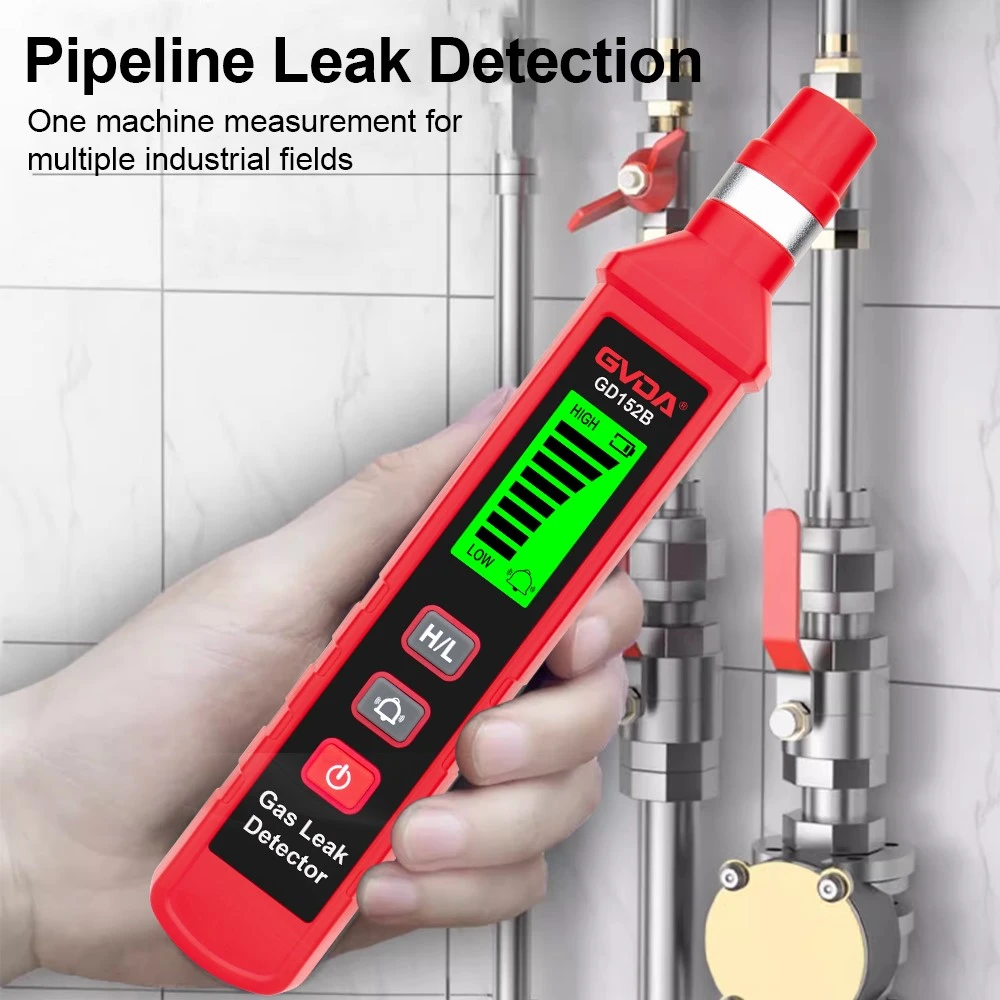
Gas detectors are instrumentation tools used to detect the concentration of gas leaks, mainly referring to portable or handheld models. They have been widely applied in numerous industries and fields.