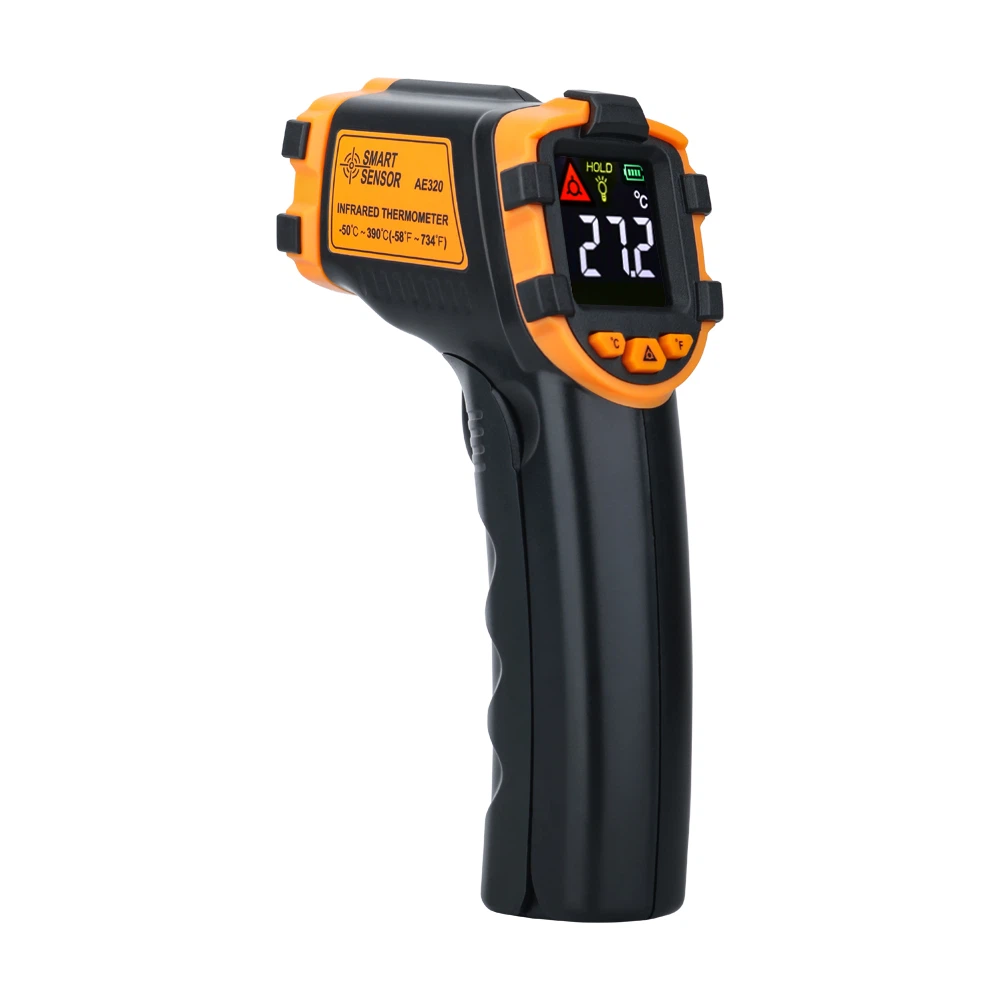
Research on the self-calibration error comparison method of infrared thermometer
1) All parts are assembled intact without any defects;
2) Characters, symbols, and scales should be completed clearly;
3) The appearance and components should be well treated, without rust or mold spots;
4) If there is a "BAT" prompt, replace the battery in a timely manner;
5) The objective lens and eyepiece are undamaged, and the aiming should be clear. If there is a lot of dust in the environment, the surface of the lens should be cleaned, and the surface dust should be blown off with clean air or brushed off with a soft bristled brush.
Determination of Basic Error 2
Pay attention to environmental conditions and avoid intermediate media such as water vapor, dust, smoke, carbon dioxide, etc., as they may obstruct the optical system of the instrument and affect the self calibration results. Place the infrared thermometer under test at room temperature of (20+2) ℃ and preheat for 20 minutes before performing self calibration. This method calibrates the basic error of the 100 ℃ point, determines the range of measurement distance changes and emissivity, and conducts qualitative testing and analysis on the equipment. Heat the water tank until the water boils for 5 minutes and maintain a constant temperature field before testing. Adjust the emissivity of the infrared thermometer to 0.94 and the distance to 2 meters. Aim at the center point of the black tape on the water tank for measurement, and calculate the error based on the measurement results
γ=[(EBC-EB)/EB] × 100%
In the formula:
γ is the fundamental error;
EBC is the indicated value of the tested infrared thermometer (℃);
EB is the corrected standard thermometer indication value (℃);
3. Impact of distance measurement changes
Maintain the conditions specified for basic error measurement, change the measurement distance to 4 m, 6 m, 8 m, 10 m, and 12 m one by one for measurement, record the measurement results in sequence, and compare them with the values determined for basic error. The error changes caused by changes in measurement distance shall not exceed the provisions in Table 1.
Determination of emissivity range
Emissivity is an important indicator that affects measurement results, and selecting the appropriate emissivity is crucial. Due to prolonged on-site testing, the emissivity measurement range of the infrared thermometer may change, and determining the emissivity range before use directly affects the measurement results. Adjust the measurement distance to 2 meters, keep the indicated value of the infrared thermometer (℃) consistent with the standard thermometer (℃), and repeatedly adjust the emissivity of the tested infrared thermometer. At this point, the range of changes in the emissivity of the tested infrared thermometer is its normal operating range.
6 Calibration conditions
1) When measuring an infrared thermometer, the required temperature is (20 ± 2) ℃ and humidity is ≤ 85%;
2) The environment is clean, vibration free, and free of intermediate media such as water vapor, dust, smoke, carbon dioxide, etc.
3) Perform self calibration after the water in the tank boils for 5 minutes and the temperature field stabilizes.
4) During self calibration, the center of the self-made heating water tank black adhesive tape should be aligned, and the measurement orientation and distance should be kept consistent during repeated measurements.