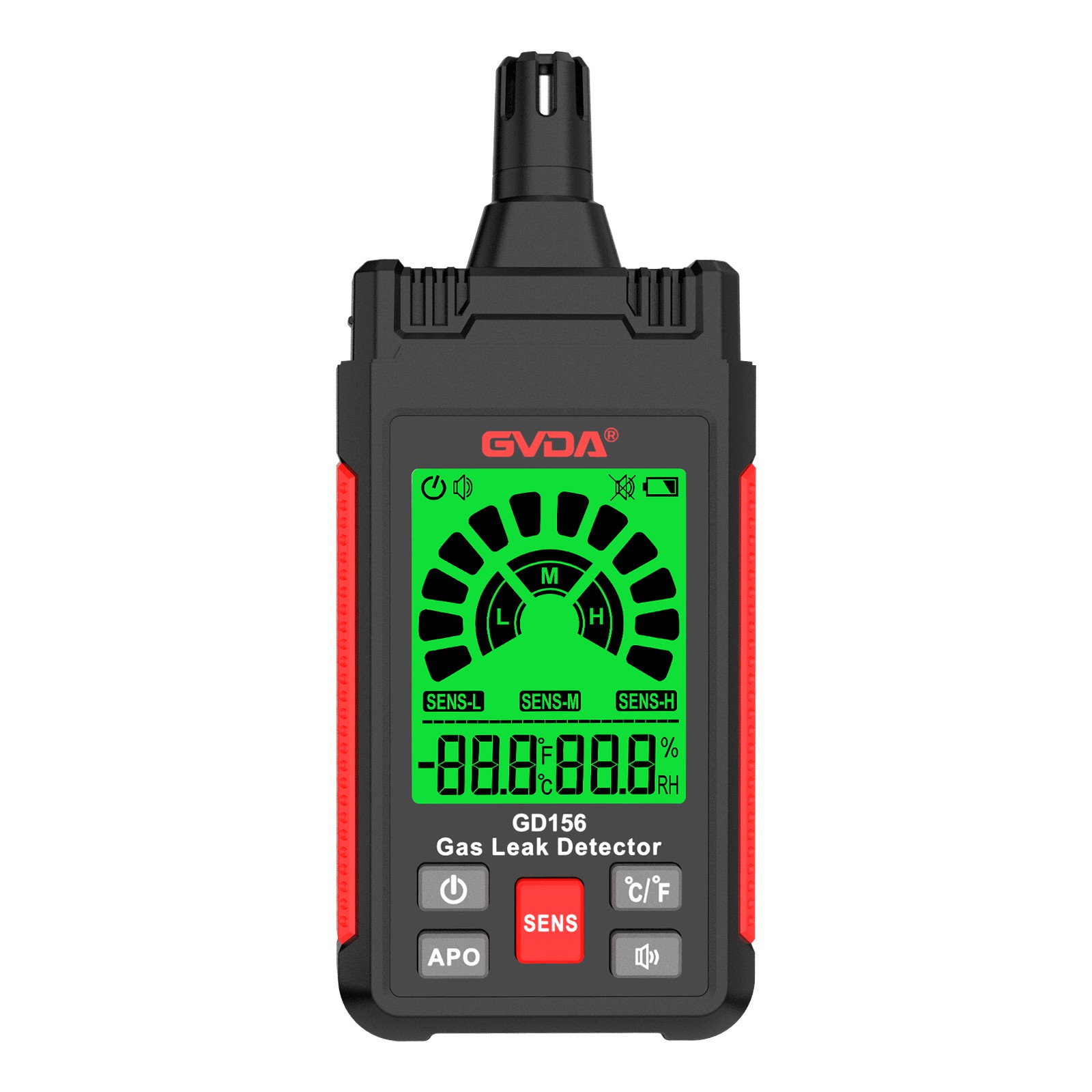
Selection of gas detectors
The main function of the gas detector is to remind relevant personnel to take relevant measures to protect on-site staff, the safe operation of production equipment and the surrounding environment in the event of leakage or imminent danger. If you choose the right detectors to use, you'll make them perform better. There are a variety of gas detection technologies that can help today's industry protect people and production. Of course, each technology has advantages and disadvantages. From the following most popular technologies, we will see that there is no single "best way", only the best gas detection system that combines multiple technologies according to your actual situation.
The gas detector is mainly composed of sensors and related circuits. The sensor is the key part of the whole detector and is one of the important factors to determine its reliability. At present, there are the following gas detection technologies: electrochemical technology, catalytic combustion technology, chemical paper tape technology, solid metal oxide technology, infrared technology, photoionization technology, etc.
Electrochemical technology and catalytic combustion technology
Different electrochemical gas sensors contain different components, which determine that it can react with the corresponding toxic gas; the measuring head can measure the current generated by the reaction and convert it into a gas concentration value (PPM or PPB). Catalytic sensors "flameless" combustible gas on a catalyst-coated ball; the measuring head measures the change in resistance and, via A/D conversion, displays the corresponding reading of the change. Generally, the lower explosion limit is the full scale.
Due to the relatively low cost of electrochemical and catalytic combustion measuring heads, they are often used for measurements at "source points" (where leaks may occur). Therefore, the response to leaks is fast and can be continuously detected. Also, since there are no moving parts, there are no mechanical failures.
However, these two sensors also have disadvantages: some gas sensors not only react to the corresponding gas (that is, the gas that should be designed to react), but also to other gases (interfering gases), so if necessary, care should be taken to avoid design and Use these sensors where interfering gases may be present during installation. The sensor needs to be calibrated regularly, usually once every three months (depending on the influence of factors such as different brands, working environment, working status, etc.); the sensor usually needs to be replaced after 1 to 3 years of use (depending on factors such as different brands, working environment, working conditions, etc.) influences). In addition, some brands of sensors use electrolyte, which needs to be replenished regularly.
chemical paper tape technology
Chemical paper tape technology detects toxic gases using chemically soaked paper tape. This paper tape is very similar to litmus paper, and it will change color when it encounters a corresponding gas; the paper tape machine measures the color of the paper tape through a photocell and converts it into a gas concentration value.
The advantage of this system is that the tape machine provides physical evidence of gas leakage due to the discoloration reaction (by contrast, electrochemical, catalytic combustion, solid metal oxide and infrared probes only output a 4-20mA signal). In particular, They are also affected by interfering gases, but less so than electrochemical and solid metal oxide types, so they are more specific than them. In addition, the tape machine can detect more gas than the electrochemical type.
The disadvantage of the paper tape machine is that it can only detect toxic gases and cannot detect flammable gases such as hydrogen. Because the paper tape machine is expensive, it is usually placed in the center and connected to each measurement point through a sampling pipe; the gas sample of each measurement point is pumped in turn. As a result, there is a significant time lag between gas leaks and detection, and sequential pumping can cause detection instruments to ignore some gas leaks. In addition, reactive gases (such as HF, Cl2, HCl, NH3) are easily adsorbed on the sampling tube, and the detection instrument cannot "see" the gas leak. Mechanical failures have also been an issue with tape machines (stuck carton drives, dirty optics, bad pumps, clogged filters, erratic flow), so regular preventive maintenance is required. Periodic calibration of the optical system is also necessary. The manufacturer recommends replacing the paper tape every six months. While this is a simple process, washi tape is really expensive to purchase and dispose of.
Solid Metal Oxide Technology
Solid metal oxide sensors are made of metal oxides (usually tin oxide) and respond to the presence of a gas by changing resistance; the measuring head measures the change in resistance and converts it to concentration.
The advantage of solid metal oxide sensors is that they have a long service life, typically 10 years. They can detect a very wide range of gases, even those that cannot be detected by electrochemical and paper tape machines. Because they are relatively inexpensive, they are often used for "at source" detection, respond quickly to leaks, and can be detected continuously. They have no moving parts that could cause mechanical failure.
Although solid metal oxide sensors can detect a variety of gases and have high sensitivity, their selectivity is poor, so the probability of "false positives" is significantly higher than other technologies. Additionally, when they are not exposed to the gas being detected for a period of time, solid metal oxide sensors oxidize and go into a "dormant" state, meaning they do not respond to a real gas leak. Also, solid metal oxide sensors provide non-linear output, so calibration is much more difficult and takes longer than linear output electrochemical sensors.
Infrared technology
Fourier Transform Infrared (FTIR) instruments use spectrophotometric techniques to detect gases. As infrared light passes through and is absorbed by the sample gas, the instrument determines its composition by analyzing its absorption spectrum.
Without a doubt, FTIR is by far the most accurate gas technique for general applications, with good sensitivity and very low false alarms. No spare parts are consumed, so the post-maintenance cost is much lower than other technologies. However, due to the high price, the FTIR is usually placed in the center and connected to the various measurement points through sampling pipes; the gas sample at each measurement point is pumped in turn. Therefore, there is a significant time lag between gas leak and detection.
In addition, like the paper tape machine, reactive gases (such as HF, Cl2, HCl, NH3) are easily adsorbed on the sampling tube, and the detection instrument cannot "see" the gas leakage. Mechanical failures are also a problem with FTIR instruments: worn or stuck rotating shutters, damaged pumps.