Selection of Stereomicroscope Magnification for Different Observation Needs
How to Select the Observation Magnification of a Stereomicroscope for Different Requirements
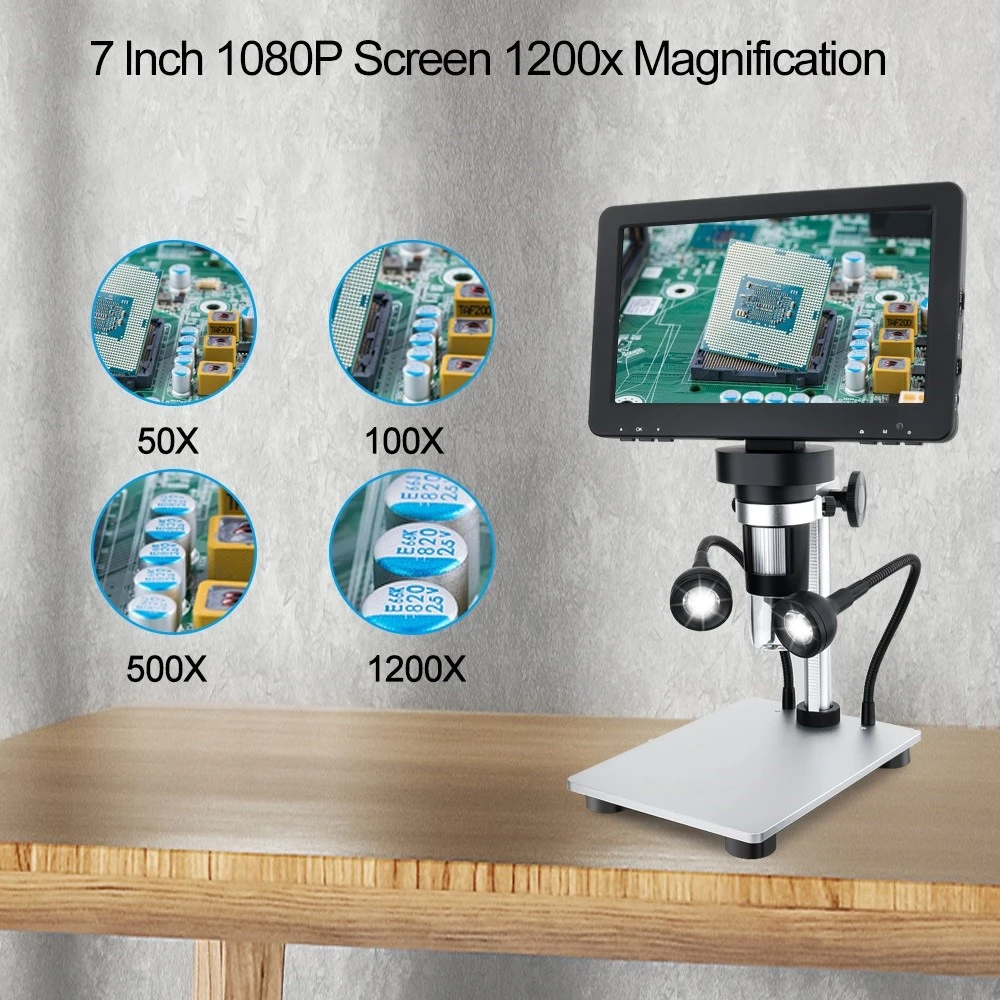
Stereomicroscopes are used for three-dimensional inspection and observation of electronic components, integrated circuit boards, turning tools, magnets, etc. Since different objects need to be observed under different magnifications, how can we meet these diverse requirements? This can be achieved in several ways: a. by optical performance; b. by selecting video observation; c. by mechanical performance; d. by light source illumination.
Optical performance: According to the observation requirements of the specimen, different eyepieces and objective lenses are selected to balance high magnification and large field of view. When high magnification is required, high-power eyepieces and objective lenses can be replaced. When a wide field of view is needed, replace the objective lens and use a low-power or wide-field eyepiece to meet the requirement.
Video observation: When the optical magnification is insufficient, electronic magnification can be used for compensation. If real-time observation and image storage are needed, video observation is available. There are several video modes: A. direct display on a monitor; B. connection to a computer (via a digital CCD or analog CCD image capture card); C. connection to a digital camera (different digital cameras require consideration of interface compatibility and matching performance with the stereomicroscope).
Mechanical performance: For scenarios such as welding, assembly, inspection of large integrated circuit boards, and applications requiring a specific working distance, the requirements can be satisfied through mechanical configurations, such as universal brackets, support frames, large moving platforms, etc. With these features, large specimens can be inspected directly by adjusting the support frame and platform without moving the test object.Example: Company A needs fine inclined observation for relatively large circuit boards. It is difficult to move the circuit board, so the inspection must be completed by mechanical adjustment. A universal bracket can fully satisfy such usage requirements.