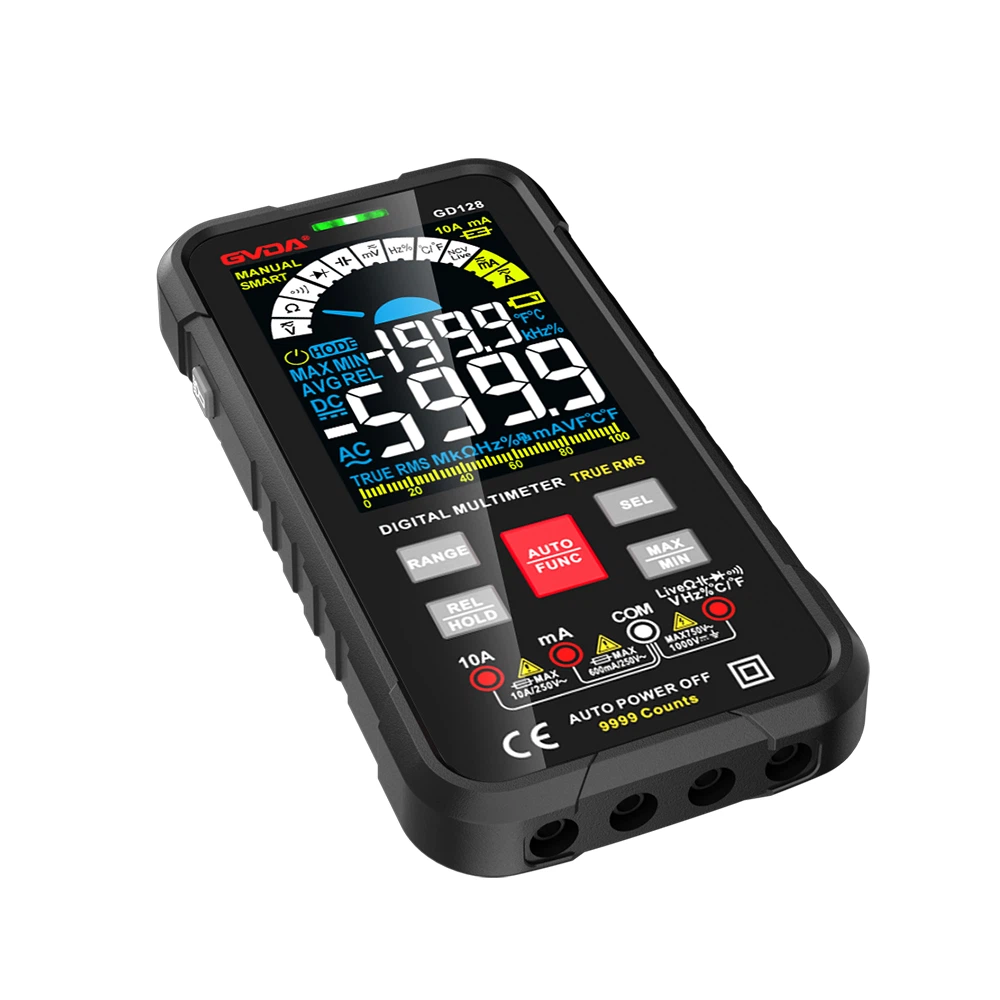
Should you connect a multimeter in series or parallel to measure current?
There are two main methods for measuring current with a multimeter: series method and parallel method. The series connection method is to connect the current measuring end of a multimeter to the series path of the circuit under test, so that the current can be measured through the multimeter; The parallel connection rule is to connect the current measuring end of the multimeter in parallel with the circuit under test, so that some of the current is measured through the multimeter.
The circuit connection of the series method is to connect the common terminal of the multimeter and the current measurement terminal together, and then connect the current measurement terminal to the series path of the circuit under test. The specific operation steps are as follows:
Before using a multimeter to measure current, it is necessary to first adjust the current measurement gear to an appropriate range to ensure the accuracy of the measurement results. If the current value is relatively small, a smaller measurement gear should be selected.
First, disconnect the circuit under test and turn off the power supply in the circuit.
Connect the positive and negative power leads of the multimeter to both ends of the circuit under test.
Select the current measurement gear to the appropriate position and ensure that the selection knob of the multimeter is turned to the current measurement position.
Turn on the power supply in the circuit under test to allow current to flow through it.
By observing the display value of the multimeter, the measurement result of the current can be obtained. If multiple measurements are required, the values of each measurement can be recorded and averaged to improve accuracy.
The circuit connection of the parallel method requires connecting the current measuring end of the multimeter to the parallel path of the circuit under test, and adjusting the proportion of current entering parallel to ensure that the multimeter can withstand and measure the required current.
The steps for measuring current using the parallel method are as follows:
Disconnect the circuit under test and turn off the power supply in the circuit.
Turn the selection knob of the multimeter to the current measurement position.
Connect the current measurement terminal to the parallel path of the circuit under test. Specifically, the current measurement lead of the multimeter can be disconnected first, then a section of wire in the circuit under test can be connected to one current measurement lead of the multimeter, and the other current measurement lead can be connected to the remaining wires in the circuit under test.
Turn on the power supply in the circuit under test to allow current to flow through it.
By observing the display value of the multimeter, the measurement result of the current can be obtained. Similarly, if multiple measurements are required, the values of each measurement can be recorded and averaged.
It should be noted that when measuring current, the appropriate measurement gear should be selected and the power should be disconnected in a timely manner to ensure safety. In addition, it is necessary to pay attention to the correct connection of the measurement leads to avoid measurement errors. When measuring large currents, it is also necessary to ensure that the multimeter can withstand and measure the required current to avoid damaging the multimeter.