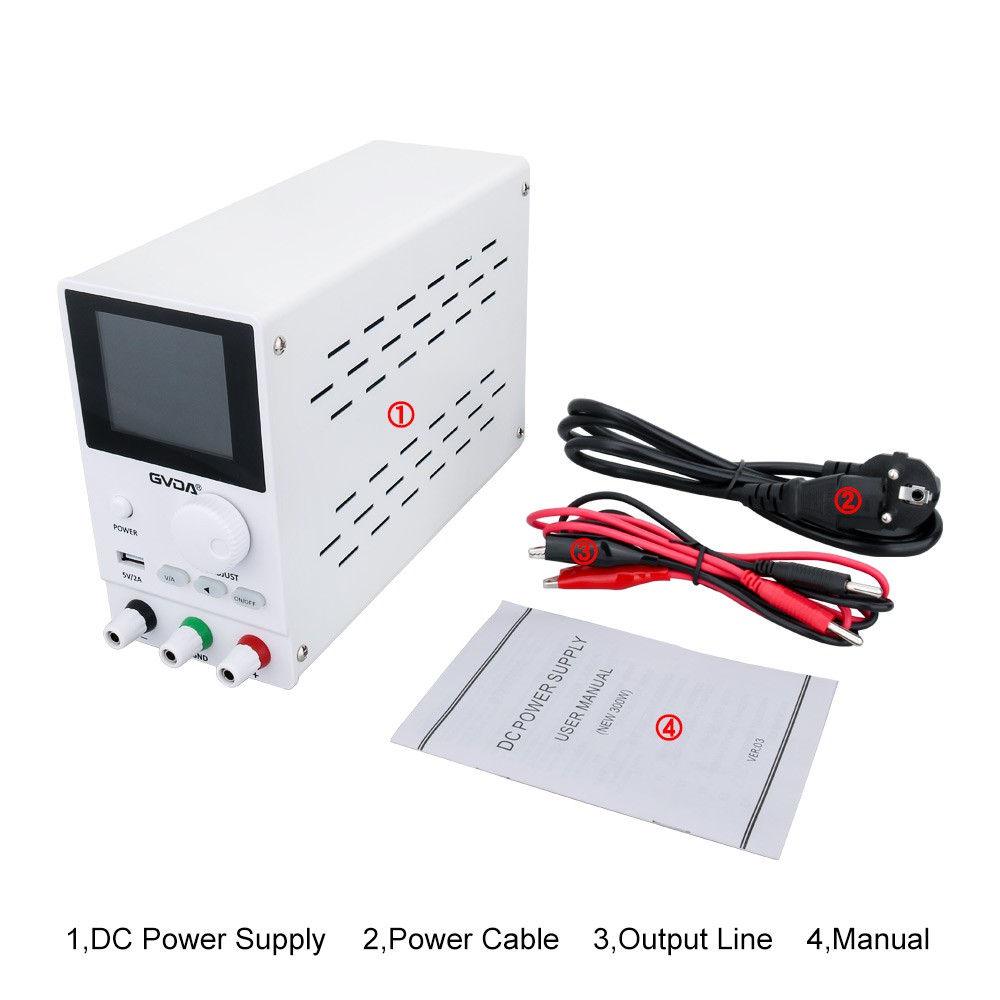
Similarities and differences between high-frequency switching power supply and linear power supply
1. The difference between high-frequency switching power supply and ordinary power supply
The characteristics of ordinary power supply:
It is usually a linear power supply, and a linear power supply refers to a power supply in which the regulator tube works in a linear state. However, this is different from high frequency switching power supplies. The switch tube (in the switching power supply, the adjustment tube is usually called the switch tube) works in two states: on-resistance is very small; off-resistance is large.
Features of high frequency switching power supply:
A high-frequency switching power supply is usually composed of (pulse width modulation) PWM control IC and MOSFET. With the development and innovation of power electronics technology, switching power supplies are mainly used in small size, light weight, and high efficiency, which are almost applied to all electronic devices, and their importance is obvious.
High-frequency switch-mode power supplies are a relatively new type of power supply. It has the advantages of high efficiency, light weight, voltage step-up and step-down, and high output power. However, since the circuit works in the switching state, the noise is relatively large. Let us briefly discuss how a step-down switching power supply works.
The circuit consists of a switch K (transistor or field effect tube in the actual circuit), a freewheeling diode D, an energy storage inductor L, a filter capacitor C, and the like. When the switch is closed, the power supply will supply current to the load through the switch K and the inductor L, and will store a part of the electric energy in the inductor L and the capacitor C. Due to the self-inductance of the inductor L, the current will increase relatively slowly after the switch is turned on, that is, the output cannot reach the supply voltage value immediately. After a certain amount of time, the switch will turn off. Due to the self-inductance of the inductor L (it can be more clearly assumed that the current in the inductor has an inertial effect), the current in the circuit remains constant, i.e. it continues to flow from left to right, this current flows through the load, from ground The wire returns, flows to the anode of the freewheeling diode D, flows through the diode D, and then returns to the left end of the inductor L, forming a loop. The output voltage can be controlled by controlling when the switch closes and opens (i.e. PWM pulse width modulation). When the output voltage is detected to control the on and off time to keep the output voltage constant, the purpose of voltage regulation is achieved.
2. The similarities between high-frequency switching power supply and ordinary power supply
The trick is that they have a voltage regulator and use the feedback principle for voltage regulation. The difference is that the high-frequency switching power supply is adjusted through the switching tube, while the ordinary power supply is usually tuned through the linear gain range of the triode.
In contrast, the power consumption of the switching power supply is small, the application range of the AC voltage is wide, and the ripple coefficient of the DC output is better.
The main working principle of an ordinary half-bridge switching power supply is that the switching tubes of the upper bridge and the lower bridge (when the frequency is high, the switching tube is VMOS) are turned on one by one. First, the current flows in from the upper bridge switch tube, and the storage function of the inductance coil is used to collect electric energy. In the coil, the switch tube of the upper bridge is closed, and the switch tube of the lower bridge is opened. The inductor coil and capacitor continue to supply power to the outside. The lower switch is then turned off and the upper switch is turned on to allow current in, and the process is repeated. Since the two interrupters must be switched on and off one by one, it is called a switching power supply.
Linear power supplies are different. Since there is no switch action, the header hose will always drain. If there is too much, the water will leak out. This usually happens when some linear power regulator tubes generate a lot of heat, the inexhaustible supply of electrical energy is all converted into heat. From this point of view, the conversion efficiency of the linear power supply is very low, but if the heat generation is high, the life of the components will inevitably be reduced, thus affecting the final use effect.