So messen Sie mit einem Multimeter, ob die Erdung gut oder schlecht ist
People who understand electricity know that grounding wires are important, and grounding can play a life-saving role when it is crucial. To make the grounding wire effective, it needs to be wired from the grounding hole of the three hole socket, then to the home grounding main line, then to the grounding main line of the entire building, and finally to the grounding electrode to maintain a connected state. Generally, the grounding resistance should be less than 4 ohms
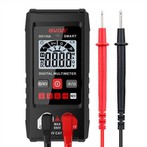
How to use a multimeter to measure whether the grounding is good or bad? Generally, the resistance range of a multimeter is used, with one probe connected to the grounding hole of a socket and one end connected to a buried steel bar, iron object, or even a steel water pipe entering the household. If the measured resistance value is relatively small (ranging from a few ohms to tens of ohms, because this measurement method is only approximate and we cannot guarantee good grounding of the buried steel bar and the steel water pipe entering the household), then it can be basically determined that the grounding wire is effective. If the measured resistance is several hundred ohms or even a few megaohms, it can be basically determined that the grounding wire is faulty. Of course, if precise measurement is required, a grounding shake meter or grounding resistance tester should be used to test the grounding resistance.
There are several reasons for grounding failure, one of which is that the grounding electrode of the socket does not have a grounding wire or the grounding wire is loosely connected. Secondly, there is a broken circuit in the middle of the grounding wire. The third issue is that the grounding wire is not connected to the grounding electrode to a limited extent. Fourthly, there is no grounding electrode at all.
However, in household electricity usage, whether the grounding wire is connected and effective. The answer should be negative.
As far as I know, most rural electricity uses do not have a grounding wire. The power grid usually consists of two neutral and neutral wires, and the grounding of rural households is generally ineffective. Generally, in rural areas, self built houses are built without the awareness of burying grounding electrodes themselves. In addition, the installation of water and electricity in self built houses in rural areas is carried out by some electricians, who are not interested in doing grounding work. Finally, installing grounding electrodes and wires themselves will increase material and labor costs. Standardizing the safe use of electricity in rural areas is a relatively lengthy process.