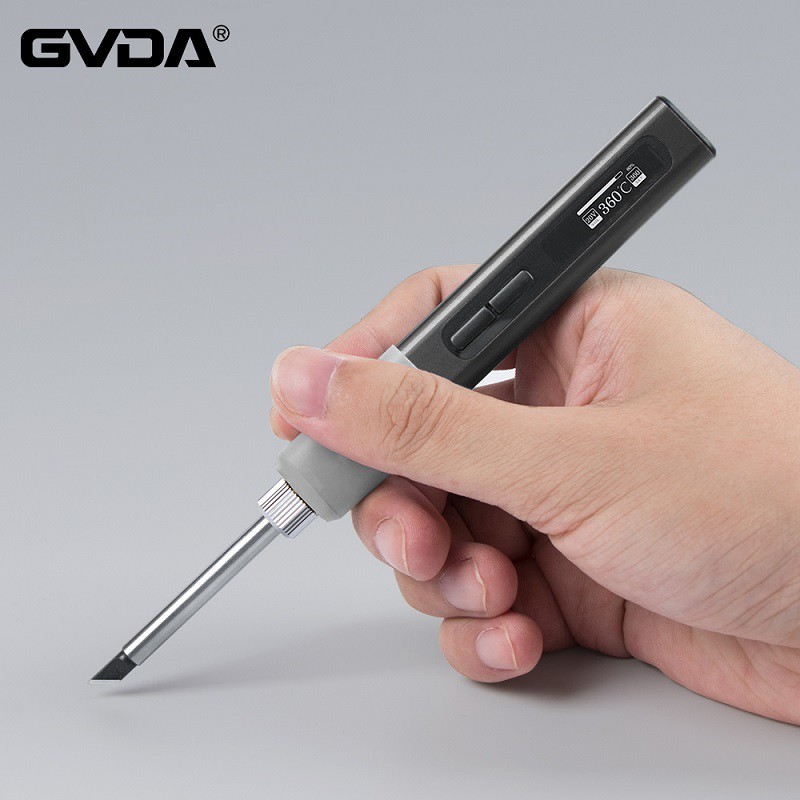
Soldering skills of electric soldering iron
Soldering is to solder the "test" qualified components to the printed circuit board or the designated position as required. When soldering, you must master the temperature of the electric soldering iron and the soldering time. If the temperature is too low and the time is too short, the soldered tin surface will be like a burr-like tail, the surface is not smooth, or even bean curd residue. After evaporation, a certain amount of flux remains between the solder and the metal. After cooling, the flux (rosin) sticks the solder to the metal surface, and it can be pulled apart with a little force. This is the so-called false soldering.
Furthermore, when the temperature of the electric soldering iron is too low, it is eager to solder, and the tin on the solder joint melts very slowly. Components are damaged (such as melting of capacitor plastic package, resistance change of resistors due to heat, etc.), especially transistors, which will be damaged when the core is heated above 100°C. Conversely, if the temperature of the electric soldering iron is too high, the soldering time will be slightly longer, which will cause the solder surface to oxidize, and the solder flow will spread out. Only a small amount of solder will connect the component leads to the metal surface. The contact resistance is very large, and it will be disconnected when it is pulled. This is the so-called virtual soldering, and in severe cases, it will cause the copper foil strips on the printed circuit board to curl and fall off, and the components will be overheated and damaged. Whether the temperature of the electric soldering iron is suitable can be judged by experience according to the length of the tinning time of the soldering iron head and the amount of solder attached to the head. The length of welding time should ensure that the solder joints are smooth and bright, generally 2 to 3s, and the slightly larger solder joints should not exceed 5s. Welding transistors and other vulnerable parts are still the same as when tinning, use tweezers, needle-nose pliers, etc. to clamp the root of the pin to help heat dissipation.
In addition, the amount of solder should be appropriate. Do not use a large ball of solder to paste the solder joints. As shown in Figure 5 (d), the outline of the lead can be vaguely distinguished from the tin surface of the solder joints, and from the solder joints It looks like a volcano from the side, which is a qualified solder joint. When soldering with a hand-held soldering iron, do not use the soldering iron tip to rub the soldering surface back and forth or touch it hard. In fact, as long as the contact area between the tinned part of the soldering iron tip’s bevel and the soldering surface is increased, the heat can be effectively transferred from the soldering iron tip to the solder joint. part. It should be noted that after the soldering is completed and the soldering iron is removed, wait until the solder on the solder joint is completely solidified (4 to 5 seconds), and then loosen the tweezers or hands that fix the component, otherwise the lead wire of the welded part may come out, or the surface of the solder joint may It is like tofu residue. After welding, if you find that the tail of the solder joint is pulled out, use the tip of the electric soldering iron to dip the rosin, and then repair the welding to eliminate it.
If there are dross edges and corners, it means that the welding time is too long, and it is necessary to remove the debris and re-weld. The components on the printed circuit board should be suspended and then soldered. There should be a gap of 2 to 4mm between the component body and the circuit board surface, and it should not be close to the board surface. The transistor should be higher. For larger components, after being inserted into the circuit board hole, as shown in Figure 6, the lead wire can be bent 90° along the direction of the circuit copper foil strip, leaving a length of 2mm and flattened before welding to increase the firmness. When welding high input impedance devices such as integrated circuits, if the reliable connection between the shell of the electric soldering iron and the ground cannot be guaranteed, you can use the residual heat to weld after unplugging the power plug of the electric soldering iron. When soldering printed circuit boards, it is also possible to insert the resistors first, and after point-by-point welding, use pliers or nail clippers to cut off the excess length of the leads, and then solder larger components such as capacitors, and finally solder them on. Heat-resistant and vulnerable transistors, integrated circuits, etc.