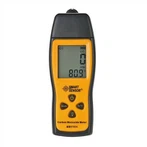
Some experiences with multimeters
Multimeter with intuitive display, high accuracy, full-featured, but because it is not suitable for measuring continuous changes in the amount of electricity and the price is more expensive than the analogue pointer multimeter, so the analogue pointer multimeter is still widely used. This article introduces ten points of experience in the use of multimeters (analogue) to beginners. Correct use can not only get accurate test data, but also can make the multimeter to avoid damage.
1, before use, you must see clearly whether the function switch is in the corresponding position of the measured power, whether the pen is in the corresponding jack.
2,According to the requirement of "ground" or ""arrow"" symbol on the head of the meter, place the multimeter vertically or horizontally if the pointer does not point to the starting point of the scale, you should adjust the mechanical zero position first.
3, according to the size of the measured quantity of electricity to choose the appropriate range. Measurement of voltage, current should try to make the pointer deflection to more than 1/2 of the full degree, which can reduce the test error. If you do not know the size of the measurement, you can first use * large range measurement and then gradually reduce the range until the pointer has a larger deflection. But in the test of high voltage (more than 100 volts) or high current (0.5 amps or more 0 should not be charged to change the range, otherwise, there is a possibility that the transfer switch contact fire candle.
4, DC voltage or DC current measurement should pay attention to the measured polarity. If you do not know the measured voltage of the two points of the high and low, the two pens can be briefly touch the two points, according to the direction of the pointer impact to determine the potential of the high and low, and then measured.
5,When measuring AC voltage, we should know whether the frequency of AC voltage is within the working frequency range of multimeter, generally the working frequency range of multimeter is 45-1500Hz. beyond 1500Hz, the measurement reading will be drastically deviated. The measurement reading will be drastically low. AC voltage scale is for sine wave RMS value to scale, so the multimeter can not be used to measure triangular wave, square wave sawtooth wave and other sine wave voltage. When the AC voltage superimposed on the DC voltage, should be strung with a voltage value sufficient isolation capacitor and then measured.
6, when measuring the voltage on a load, we should consider whether the internal resistance of the multimeter is much larger than the load resistance, if not due to the shunt effect of the multimeter, the reading value will be much lower than the actual value, then you can't test directly with the multimeter, should be changed to other methods. Multimeter voltage block internal resistance is equal to the voltage sensitivity multiplied by the full-scale voltage value, such as MF -30 multimeter in DC100 volts block voltage sensitivity of 5 kilohms, the block internal resistance is 500 kilohms. Generally speaking, low range block internal resistance is small, high range block internal resistance is large, when the low voltage block test a voltage due to internal resistance is small resulting in a large shunt effect, it may be worthwhile to change to a high range test, so that, although the pointer deflection angle is small, but due to the shunt effect is small, it is possible that on the contrary, the accuracy of a higher precision. Measurement of current has a similar situation, the multimeter as an ammeter, a large number of range block internal resistance to small range block internal resistance.
7,When measuring the resistance, every time you change the gear, you have to
Zero. The value of the geometric centre of the multimeter resistance scale multiplied by the multiplier of the resistance block is the median resistance of the block, which is equal to the internal resistance of the multimeter in the block. The common centre scale values are 8, 10, 12, 13, 16, 20, 24, 25, 30, 60, 75 and so on. Resistance scale is non-linear, use to choose the appropriate gear so that the pointer as far as possible to point in the centre of the nearby, usually in the 0.1Ro-10Ro (Ro ----- medium value resistance) within the range of more accurate readings, outside this range of error is greater. For example, MF10 multimeter centre scale value of 13, in Rx10 kilohm block Ro = 130 kOhm, the block is suitable for measuring 13 kOhm-1. 3 megohm resistance.