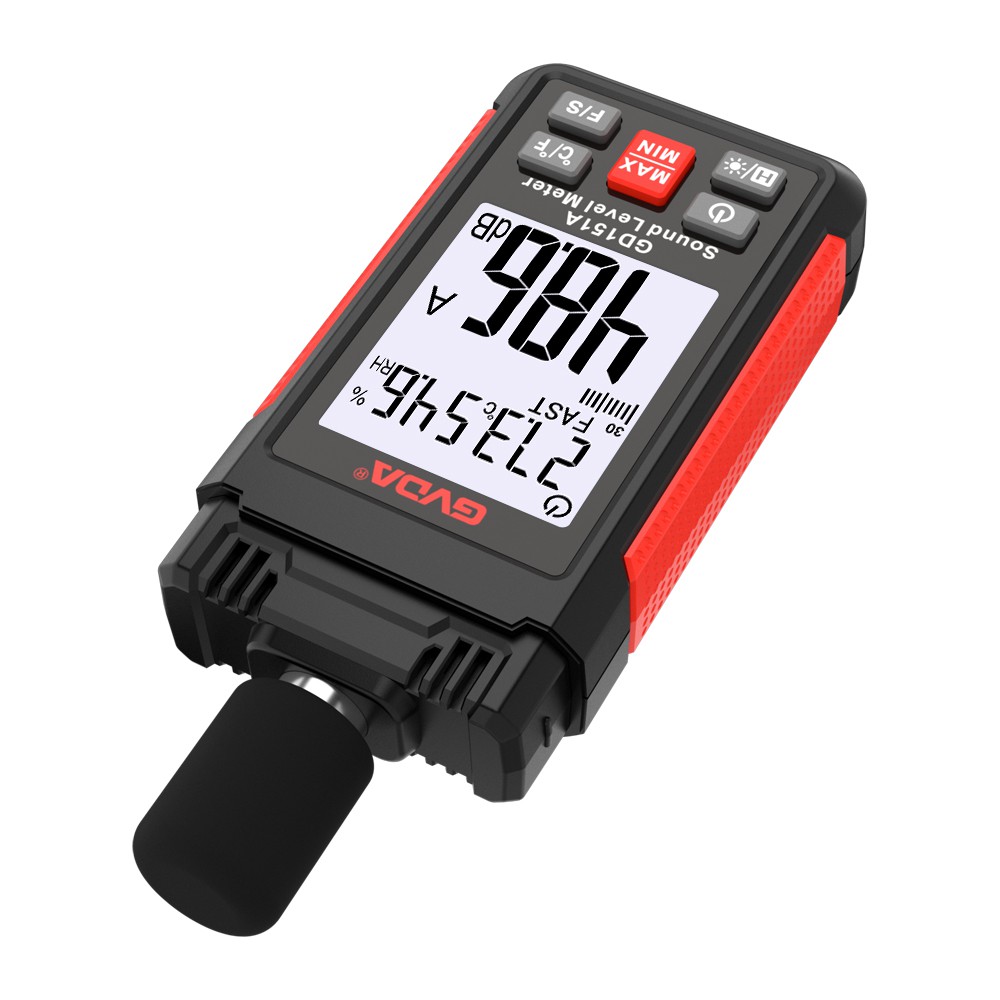
Specific operation steps of noise meter
1. Open the noise meter carrying case, take out the noise meter, and put on the sensor.
2. Set the noise meter to state A, check the battery, and then calibrate the noise meter.
3. Refer to the common environmental sound level table and adjust the measurement range of the instrument.
4. Measurement: Various functions can be used for measurement, including fast (measuring instantaneous values in environments with large changes in sound pressure levels), slow (measuring average values in environments with small changes in sound pressure levels), pulse (measuring pulse sound sources), and filter (measuring sound levels in specified frequency bands).
5. Record measurement data.
6. After the measurement is completed, it is recommended to use a sound calibrator to check the sensitivity of the noise meter to ensure the accuracy and reliability of the measurement data.
7. Organize the equipment, dismantle the sensors and batteries, and place them back in the designated location.
Noise meter - sensitivity calibration
To ensure measurement accuracy, calibration should be performed before and after use.
Connect the sound level calibrator to the microphone, turn on the calibration power, read the value, adjust the sensitivity potentiometer of the noise meter, and complete the calibration.
A noise meter, also known as a sound level meter, is the most basic instrument in noise measurement. A sound level meter generally consists of a condenser microphone, preamplifier, attenuator, amplifier, frequency meter network, and effective value indicator head. The working principle of a sound level meter is that the sound is converted into an electrical signal by a microphone, and then the impedance is transformed by a preamplifier to match the microphone with an attenuator. The amplifier adds the output signal to the network, performs frequency weighting on the signal (or an external filter), and then amplifies the signal to a certain amplitude through attenuators and amplifiers before sending it to the effective value detector.