The Anemometer Has Two Operating Modes
① Constant Current Mode: The electric current passing through the hot wire remains constant. When temperature changes, the resistance of the hot wire varies, causing a change in the voltage across it; the flow velocity is measured accordingly. ② Constant Temperature Mode: The temperature of the hot wire is kept constant (e.g., maintained at 150 °C). The flow velocity can be determined according to the required applied current. The constant‑temperature mode is more widely used than the constant‑current mode.
The hot wire generally has a length of 0.5–2 mm and a diameter of 1–10 μm, made of platinum, tungsten or platinum‑rhodium alloy. A thin metal foil (thinner than 0.1 μm) can also be used, known as a hot‑film anemometer. It has functions similar to a hot‑wire anemometer but is mostly used for measuring liquid flow velocity.
Besides the common single‑wire type, hot wires can also be assembled into double‑wire or three‑wire configurations to measure flow velocity components in multiple directions.
The electrical signal output from the hot wire is amplified, compensated and digitized before being sent to a computer. This enables high measurement precision and automatic post‑data processing to expand measurement capabilities, such as simultaneous measurement of instantaneous and average values, combined velocity, flow angle, turbulence and other flow parameters.
Compared with Pitot tubes, hot‑wire anemometers feature a small probe size, fast response to flow‑field disturbances, capability to measure highly turbulent flow and low flow velocity (as low as 0.3 m/s).
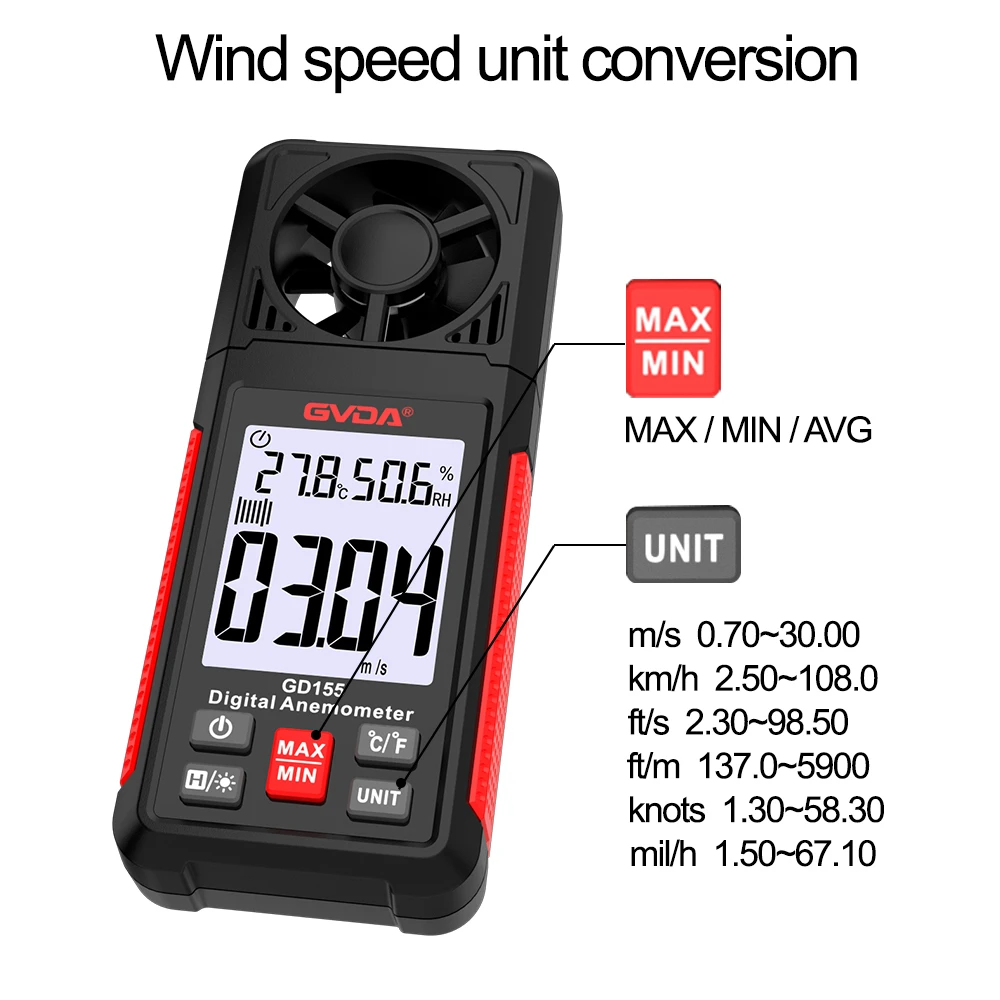
An anemometer is an instrument for measuring air flow velocity. There are many types. Cup anemometers are commonly used at meteorological stations. They consist of three hemispherical cups mounted at 120° intervals on a support frame, with the concave sides of the cups facing the same direction. The entire sensing assembly is installed on a vertical rotating shaft. Driven by wind, the cups rotate at a speed proportional to the wind speed.