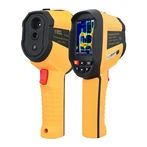
The difference between a coating thickness gauge and a non-destructive coating thickness gauge is as follows
The important differences between coating thickness gauges and non-destructive coating thickness gauges are as follows. Both coating thickness gauges and non-destructive coating thickness gauges are used to measure the nominal thickness of data, but there are certain differences between coating thickness gauges and non-destructive coating thickness gauges. Let's discuss in detail the differences between coating thickness gauges and non-destructive coating thickness gauges.
Differences in non-destructive coating thickness gauges:
Coating thickness gauge, important in the nominal processing industry, is used to measure the nominal coating thickness of metal or plastic.
Non destructive coating thickness gauges are divided into two types: magnetic and eddy current, and there are also magnetic eddy current dual-purpose types. Commonly used to measure the nominal coating thickness of a metal substrate, also known as a coating thickness gauge.
Magnetic thickness gauges are designed to measure the thickness of coatings on magnetic metals such as steel (excluding magnetic metals such as steel and nickel), while non-magnetic coatings such as copper, aluminum, and tin cannot be measured. Eddy current thickness gauges are designed to measure the thickness of the insulation layer beneath non-magnetic metals, such as copper, aluminum, etc. (the coating must have long and short conductivity data).
The above content introduces the differences between coating thickness gauges and non-destructive coating thickness gauges, hoping to be helpful for their application in the future.
The difference between magnetic (iron-based) and eddy current (non iron-based) coating thickness gauges
Coating thickness gauge magnetic (iron-based) measures the thickness of non-magnetic coatings (such as aluminum, chromium, copper, enamel, rubber, paint, etc.) on magnetic metal substrates (such as steel, iron, alloys, and hard magnetic steel)
Coating thickness gauge eddy current (non iron based) measures the thickness of non-conductive coatings on non-magnetic metal substrates (such as copper, aluminum, zinc, tin, etc.) (such as enamel, rubber, paint, plastic, etc.).
Magnetic (iron-based) F-type:
Measure the thickness of non-magnetic coatings on ferromagnetic metal substrates such as steel and iron, such as paint, powder, various anti-corrosion coatings, plastics, rubber, synthetic materials, phosphating layers, chromium, zinc, lead, tin, cadmium, etc;
Eddy current (non iron-based) N-type:
Measure the thickness of all non-conductive layers on non-ferromagnetic substrates such as copper, aluminum, and stainless steel, such as paint, powder, various anti-corrosion coatings, plastics, rubber, synthetic materials, phosphating layers, oxide layers, etc;
FNF type:
It is a combination of F-type and N-type, commonly known as a dual-purpose thickness gauge.