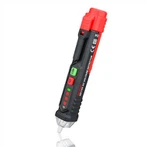
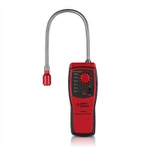
The manufacturer takes you through the LEL and PPM parameters of gas detectors
The word "LEL" is the abbreviation of lower explosive limit. In a mixture of flammable gas and air, the lowest concentration of flammable gas will explode when encountering an open flame. This lowest concentration is the so-called lower explosion limit. Its full English name is "Lower Explosion Limited".
However, flammable gas concentrations do not only pose a risk when they reach the lower explosive limit. In fact, when flammable gas is mixed with air to form a mixture of a certain proportion, combustion or explosion may occur as long as it encounters a sufficient ignition source.
For combustion to occur, three basic conditions need to be present: a combustible substance, a combustion aid (usually oxygen), and an ignition source. The combustion of combustible gas in the air can be divided into two categories: one is dispersed combustion, that is, the combustion occurs after the combustible gas escaping from the equipment is mixed with air; the other is the combustion that occurs when the mixture of combustible gas and air is mixed. This kind of combustion is usually accompanied by great pressure and sound, also known as explosion.
In order to better understand and prevent this risk, experts have conducted in-depth research on various flammable gases and determined their explosion limits. This limit is divided into an upper explosion limit and a lower explosion limit, represented by UEL and LEL respectively. If the content of combustible gas in the mixture is lower than the LEL, then combustion or explosion will not occur due to insufficient combustible content; and if the oxygen content in the mixture is lower than the UEL, combustion or explosion will also not occur.
In order to better monitor and prevent this risk, various combustible gas detectors have been designed. These instruments measure the concentration of a gas and sound an alarm when the concentration reaches a certain level. For example, a portable methane detector will sound an alarm when the methane concentration reaches 25% LEL, which means that the methane concentration at this time is 1.25% volume ratio.
When considering the alarm concentration, it is usually set below 25% of the LEL. This is because, although the concentration of the gas has exceeded the safe level at this time, it is still far from the concentration where an explosion may actually occur. This setting is to provide people with enough time to take measures, such as turning on exhaust fans or cutting off valves, to prevent possible dangers.
Additionally, ppm is a unit used to express solution concentration or gas concentration. For solutions, it represents the mass of solute per liter of aqueous solution; for gases, it represents the volume of contaminants per million volumes of air. In our country, due to the requirements of the environmental protection department, the measurement of gas concentration is usually expressed in units of mass concentration (such as mg/m³).