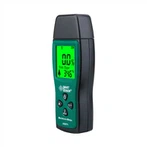
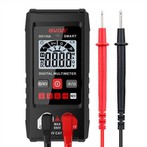
The multimeter detects the short circuit of the wire, and the result is obtained in seconds without effort
There are a bunch of newly bought wires, and it is necessary to check whether there is a short circuit problem in the wires, so as to affect the subsequent use. At this time, the multimeter comes in handy. Using a multimeter to detect the short circuit of the wires is effortless and the result is obtained in seconds.
1. Detection method
Separate the wire cores at the two ends of the wire, be careful not to cross or touch each other, then put the multimeter to the upper position (Fig. short-circuit measurement operation.
2. Test results
A measurement of 0 means there is a short between the two wires. If the measurement result shows infinity, it means that there is no problem with the line.
3. Precautions
When measuring the short circuit of the circuit, first turn off the main gate of the power supply, then adjust the multimeter switch to 1 or 10 ohm, and measure the two wire ends of the same group of circuits. If the resistance is almost 0, it means a short circuit.
Basic measurement method:
Use the ohm x1 gear of the multimeter to measure the two ends of the line. If the resistance is close to zero, it is a short circuit. When there is a certain amount of resistance (depending on the load in the line), it cannot be judged whether it is a short circuit. The smaller the value, the greater the current flowing through the line.
Use the ohm 1k or 10k range of the multimeter to measure the two ends of the line. If the resistance is infinite, it means an open circuit.
Multimeter to measure DC voltage and AC voltage
(1) Measurement of DC voltage
Such as batteries, batteries, etc. Insert the black test lead into the "com" hole, and the red test lead into "V Ω". Select the knob to a range larger than the estimated value (note: the values on the dial are the maximum range, "V-" indicates the DC voltage range, "V~" indicates the AC voltage range, and "A" is the current range), and then turn the Connect the test lead to the power supply or both ends of the battery; keep the contact stable.
The value is directly read from the display screen, if it is displayed as "1.", it indicates that the measuring range is too small, and it is necessary to increase the measuring range before measuring. If "-" appears on the left side of the value, it means that the polarity of the test lead is opposite to that of the actual power supply. At this time, the red test lead is connected to the negative pole.
(2) Measurement of AC voltage
The test lead jack is the same as the measurement of DC voltage, but the knob should be turned to the required range at the AC gear "V~".
There is no difference between positive and negative AC voltage, and the measurement method is the same as before. Regardless of measuring AC or DC voltage, you must pay attention to personal safety, and do not touch the metal part of the test lead with your hands.