The principle of triode and the method of judging pins and models by multimeter measurement
Step 1: Determine the base and tube type (NPN or PNP)
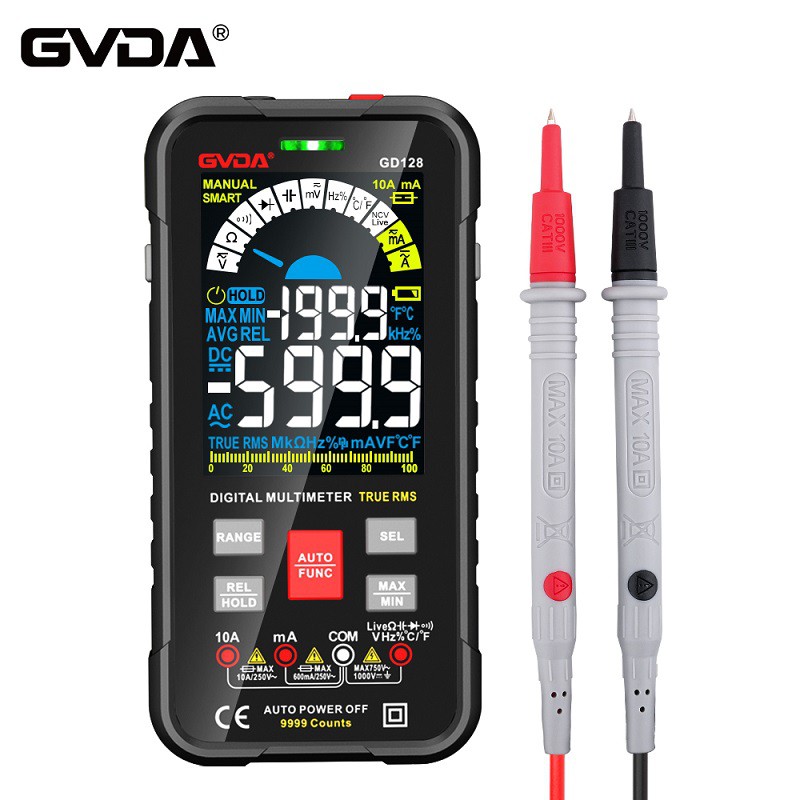
The base of the PNP tube is the common point of the two negative poles, and the base of the NPN tube is the common point of the two positive poles. At this time, we can use the diode file of the digital multimeter to measure the base. For PNP tubes, when the black test lead (connected to the negative pole of the battery in the meter) is on the base and the red test lead is used to measure the other two poles, the readings are generally not much different (generally 0.5-0.8). For a larger reading (typically 1). For the NPN tube, the red test lead (connected to the positive electrode of the battery in the meter) is connected to the base.
Step 2: Determine the emitter and collector
If you use a pointer multimeter to reach this step, you may have to use two hands, and even some friends will use their tongues, which can be said to be quite troublesome. It is much more convenient to use the hfe file of the three-dip tube of the digital meter (to measure the DC magnification of the triode) to measure. Put the multimeter on the hfe file, insert the triode into the small hole of the NPN, and the b pole corresponds to the b letter above. Reading; then reverse its other two feet, and then read. The polarity of the larger reading corresponds to the letter on the meter, and the same is true for other triodes!
Second, the method of using a digital multimeter to detect the quality of the triode is as follows:
1. Find the base: put the digital multimeter in the diode gear, connect the red test lead to any pin, and use the black test lead to touch the other 2 pins in turn. If the values displayed twice are less than 1V or the overflow symbol 1 is displayed, Then the pin connected to the red pen is the base b. If in the two tests, the displayed value is less than 1V in one test, and the overflow symbol 1 is displayed in the other, it means that the pin connected to the red test pen is not the base, and then re-measure with other pins to find the base.
2. Determine the tube type, put the digital multimeter in the diode position, connect the red pen to the base, and touch the other two pins with a black pen. If they all display 0.5V to 0.8V, the tube under test belongs to the NPN type. If the overflow symbol 1 is displayed twice, it indicates that the tube under test is a PNP tube.
3. To distinguish the collector C and the emitter e, take the NPN tube as an example, put the digital multimeter in the HFE range, and use the PNP jack. Insert base B into hole B, and insert the remaining 2 pins into holes C and E respectively. If the measured HFE is tens to hundreds, it means that the tube is connected normally and has a strong amplification capability. At this time, the C hole is inserted into the collector C, and the E hole is inserted into the emitter E. If the measured HFE value is only a few or a dozen or so, it means that the collector c and the emitter e of the tube under test are inserted reversely. At this time, the C hole is the emitter e, and the E hole is the collector c. To make the test results more reliable, the base b can be fixedly inserted into the B hole, the collector c and the emitter e are exchanged and the test is repeated twice, and the one with the larger displayed value shall prevail. The pin inserted into the C hole is the collector c, the pin of the E hole is the emitter e.
4. The test is good or bad. Still take the NPN type as an example. Open the base b and measure the resistance between c\e poles. Connect the red pen of the multimeter to the emitter, and the black pen to the collector. If the resistance is above tens of thousands of ohms, it means that the penetration current is small and the tube can work normally. If the resistance between electrodes c and e is small, the measuring tube will work unstable and cannot be used in circuits with high technical specifications. If the measured resistance is approximately 0, the tube has been broken down. If the resistance value is infinite, it means that the inside of the tube has been broken.