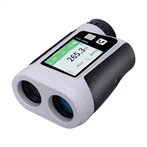
The usage method of a thermal anemometer:
1. Before use, observe whether the pointer of the electric meter points to zero. If there is any deviation, gently adjust the mechanical adjustment screw of the electric meter to make the pointer return to zero. Place the calibration switch in the OFF position.
2. Insert the measuring rod plug into the socket, place the measuring rod vertically upwards, tighten the screw plug to seal the probe, place the "calibration switch" in the full position, and slowly adjust the "full adjustment" knob to make the meter pointer point to the full position.
3. Place the "calibration switch" in the "zero position" and slowly adjust the "coarse adjustment" and "fine adjustment" knobs to make the meter pointer point to the zero position
4. After the above steps, gently pull the screw plug to expose the probe of the measuring rod (the length can be selected according to needs), and make the red dot on the probe face the wind direction. Based on the reading of the electric meter, refer to the calibration curve to find out the measured wind speed.
5. After the test is completed, the "calibration switch" should be placed in the off position.
The above is the usage method of the thermal anemometer explained by the editor. So, what are the further purposes of its use?
The use of thermal anemometer:
1. Measure the average flow velocity and direction.
2. Measure the pulsating velocity and its frequency spectrum of the incoming flow.
3. Measure Reynolds stress in turbulence and the velocity and time dependencies between two points.
4. Measure wall shear stress (usually using a hot film probe placed flush with the wall, similar to the principle of hot wire velocimetry).