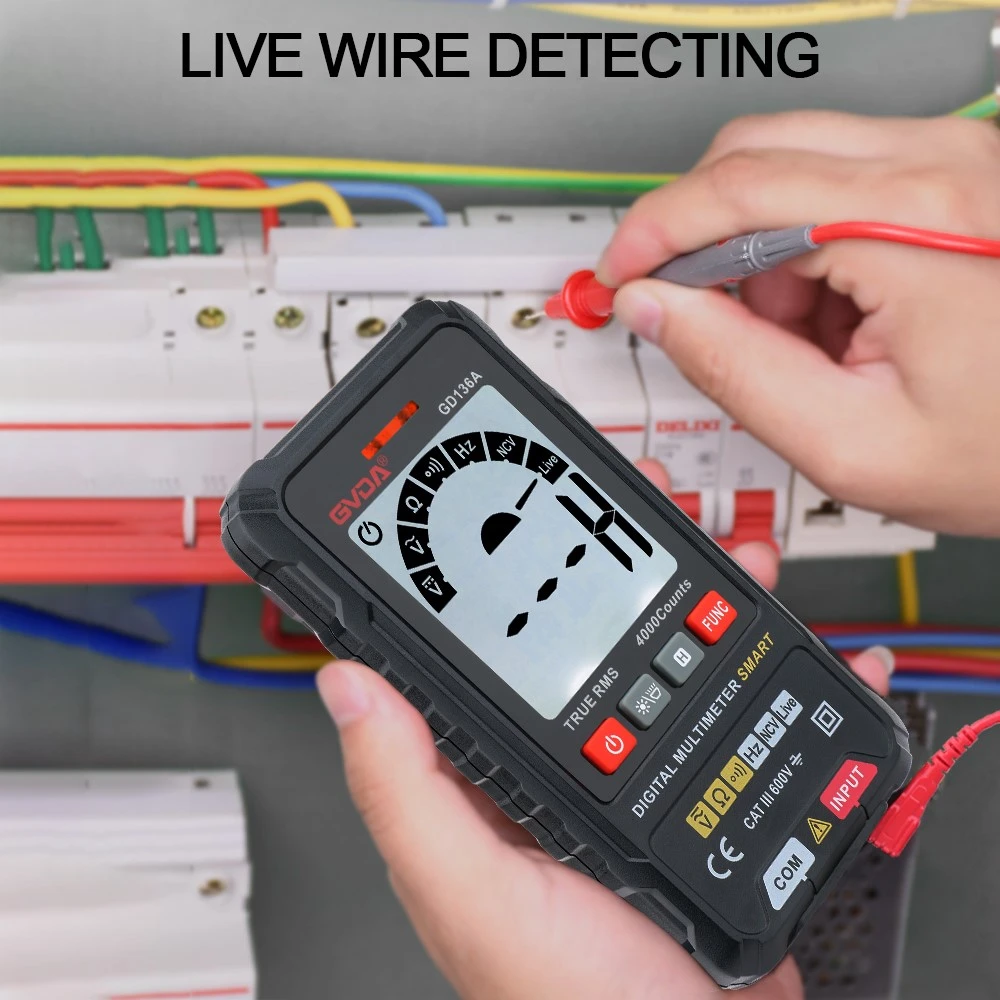
Things You Must Not Do When Using a Multimeter for the First Time
① Do not use the resistance, current or capacitance ranges of the multimeter to measure voltage.
② Do not use the resistance range of the multimeter to test energized circuits.
③ Do not use the multimeter to test power filter capacitors or power compensation capacitors that have just been disconnected and are discharging. Do not short-circuit the positive and negative terminals of electrolytic capacitors directly for discharge. If discharge is necessary, connect a discharge resistor. Otherwise, the capacitor is easily damaged. When discharging capacitors, wear qualified insulating gloves with an insulation rating higher than that of the capacitor under test and use an insulating pad to prevent arc burns.
④ Do not switch the range selector or function switch of the multimeter while the circuit is energized during measurement.
⑤ Do not perform high-voltage tests outdoors with a multimeter during thunderstorms to avoid lightning hazards to operators.
⑥ Test leads with poor insulation or cracks must not be used. If multiple jacks are available on the multimeter panel, do not insert the probes into incorrect jacks, otherwise serious consequences may occur.
⑦ Some multimeter probe tips are thick and may easily cause short circuits when testing electronic circuits. You may file the tips to a sharp point. If the exposed metal part is too long, wrap several layers of insulating tape (or fit a plastic sleeve) so that only the sharp tip is exposed.
⑧ Poor contact of the battery clip can cause failure to zero the R×1 range. If the spring clip loses tension, gently bend the spring tab with pointed pliers to restore elasticity and reduce contact resistance. Clean corrosion on the battery clip promptly with a blade or sandpaper.