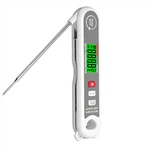
Three Major Structural Parts of a pH Meter
A pH meter is a common small testing device in laboratories. For the use and maintenance of a pH meter, most people would say it is very simple and easy. But in reality, do you really have a clear understanding of the use, maintenance, and upkeep of a pH meter? Do you want to make a small '?'.
Here are the key points below! This article mainly starts from three aspects: the principle, maintenance, common problems, and solutions of pH meters, and elaborates on all aspects of pH meters in detail.
The principle of pH meter
By measuring the potential difference of a working battery composed of an electrode and a reference electrode in a solution, and utilizing the linear relationship between the pH value of the test solution and the potential of the working battery, the measurement is achieved by converting it into a pH unit value using an ammeter.
Maintenance of pH meter
1. Storage of pH meter glass electrode
When the pH meter is not used in the short term, it can be fully immersed in a saturated potassium chloride solution. But if it is not used for a long time, it should be dried and not soaked in detergent or other absorbent reagents.
2. Cleaning of pH glass electrodes
The contamination of glass electrode bubbles may prolong the electrode response time. Use CCl4 or soap solution to wipe away dirt, then immerse in distilled water for one day and night before continuing to use. When pollution is severe, soak in 5% HF solution for 10-20 minutes, rinse immediately with water, and then immerse in 0.1N HCl solution for one day and night before continuing to use.
3. Treatment of aging of glass electrodes
The aging of glass electrodes is related to the gradual changes in the adhesive layer structure. The old electrode has a slow response, high membrane resistance, and low slope. Etching off the outer layer of the adhesive layer with hydrofluoric acid can often improve electrode performance. If this method can be used to regularly remove the inner and outer adhesive layers, the lifespan of the electrode is almost infinite.
4. Storage of reference electrode
The storage solution for silver silver chloride electrode is saturated potassium chloride solution. High concentration potassium chloride solution can prevent silver chloride from precipitating at the liquid interface and maintain the liquid interface in working condition. This method is also applicable to the storage of composite electrodes.