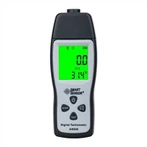
To evaluate the quality of capacitors, use a multimeter.
This is a detection method by detecting the DC resistance of each pin of the IC (the IC is in the circuit), the AC and DC voltage to the ground, and the total operating current. This method overcomes the limitations of replacing the IC and the trouble of disassembling the IC in the substitution test method, and is the most commonly used and practical method for detecting ICs.
1. In-circuit DC resistance detection method
This is a way to use the ohm block of a multimeter to directly measure the positive and negative DC resistance values of each pin of the IC and peripheral components on the circuit board, and compare it with the normal data to find and determine the fault. Pay attention to the following three points when measuring:
(1) Disconnect before measurement to avoid damage to the ammeter and components during the test.
(2) The internal voltage of the electric block of the multimeter shall not be greater than 6V, and the range is preferably R×100 or R×1k.
(3) When measuring IC pin parameters, attention should be paid to the measurement conditions, such as the tested model, the position of the sliding arm of the potentiometer related to the IC, etc., and the quality of the peripheral circuit components should also be considered.
2. DC working voltage measurement method
This is a way to measure the DC power supply voltage and the operating voltage of peripheral components with a multimeter DC voltage block under the condition of power on; detect the DC voltage value of each pin of the IC to ground, and compare it with the normal value, and then compress the fault range. Locate the damaged component. Pay attention to the following eight points when measuring:
(1) The internal resistance of the multimeter must be large enough, at least 10 times greater than the resistance of the circuit under test, so as not to cause large measurement errors.
(2) Usually turn each potentiometer to the middle position. If it is a TV, the signal source should use a standard color bar signal generator.
(3) Anti-slip measures should be taken for the test leads or probes. Any momentary short circuit can easily damage the IC. The following methods can be adopted to prevent the test pen from sliding: take a bicycle valve core and put it on the test pen tip, and grow the test pen tip by about 0.5mm, which can not only make the test pen tip in good contact with the tested point, but also effectively prevent slipping. It will not be short-circuited even if it hits a neighboring point.
(4) When the measured voltage of a certain pin does not match the normal value, it should be analyzed according to whether the pin voltage has an important impact on the normal operation of the IC and the corresponding changes in the voltage of other pins, so as to judge whether the IC is good or bad.
(5) IC pin voltage will be affected by peripherals. When leakage, short circuit, open circuit or value change occurs in peripheral components, or the peripheral circuit is connected to a potentiometer with variable resistance, the position of the sliding arm of the potentiometer is different, which will cause the pin voltage to change.
(6) If the voltage of each pin of the IC is normal, it is generally considered that the IC is normal; if the voltage of some pins of the IC is abnormal, you should start from the point where the deviation from the normal value is the largest, and check whether the peripheral components are faulty. If there is no fault, the IC is likely to be damaged. .
(7) For dynamic receiving devices, such as TV sets, the voltage of each pin of the IC is different when there is a signal or not. If it is found that the pin voltage should not change but changes greatly, and the one that should change with the signal size and the different positions of the adjustable element does not change, it can be determined that the IC is damaged.
(8) For a device with multiple working modes, such as a video recorder, the voltage of each pin of the IC is also different under different working modes.
3. AC working voltage measurement method
In order to grasp the change of the IC AC signal, a multimeter with a dB jack can be used to perform an approximate measurement of the AC operating voltage of the IC. When testing, the multimeter is placed in the AC voltage block, and the positive test lead is inserted into the dB jack; for a multimeter without a dB jack, it is necessary to connect a 0.1-0.5μF DC block to the positive test lead in series. This method is suitable for ICs with relatively low operating frequency, such as the first amplifier stage of a TV, field scanning circuits, etc. Since these circuits have different natural frequencies and waveforms, the measured data are approximate and are for reference only.
4. Total current measurement method
This method is a method to judge whether the IC is good or bad by detecting the total current of the IC power supply line. Since most of the ICs are directly coupled, when the IC is damaged (such as a PN junction breakdown or open circuit), it will cause the subsequent stage to be saturated and cut off, and the total current will change. Therefore, the IC can be judged whether it is good or bad by measuring the total current. It can also be used to measure the voltage drop of the resistor in the power path, and use Ohm's law to calculate the total current value.