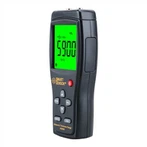
To make the ph meter measurement more accurate, you need to do the following
The ph meter is obviously a related instrument used to measure the ph value. It is widely used in metallurgy, environmental protection, biochemistry, food and tap water, chemical fertilizers, etc. It has high cost performance and excellent testing performance. In order to make the pH meter measurement more accurate, you need to do the following.
1. Measure the temperature of the standard buffer solution, check the table to determine the pHs value at the temperature, and then adjust the temperature compensation knob to the temperature.
2. Then rinse the pH meter electrode with pure water and dry it.
3. Dip the electrode of the pH meter into the buffer solution and shake it, then place it still. After the reading is stable, adjust the positioning knob to make the instrument display the pHs value of the standard solution.
4. Take out the pH meter electrode, rinse and dry it
5. Measure the temperature of the sample, and adjust the temperature compensation knob of the pH meter to the temperature value.
6. Immerse the electrode of the pH meter in the sample solution, shake it and place it still, and the reading will display after stabilization.
What about the sodium difference and acid difference of the ph meter
PH meter/acidity meter is a commonly used instrument and equipment, which is mainly used to precisely measure the pH value of liquid medium. It can also measure the MV value of ion electrode potential with the corresponding ion selective electrode. It is widely used in industry, agriculture, scientific research, and environmental protection. and other fields. During the experimental use of the PH meter, sometimes a certain amount of "tolerance" and "acidity" will be generated, so what are "tolerance" and "acidity"? What is their cause?
"Sodium difference" --- When measuring a solution with a high pH or a large Na+ concentration, the measured pH value is low, which is called "sodium difference" or "alkaline difference". The glass film of each pH electrode has a high limit for measuring pH. When this high limit is exceeded, the "sodium difference" will appear. The reason for the "sodium difference" is that sodium ions participate in the response.
"Acid difference" --- When measuring a strong acid with a pH of less than 1, or a high salinity, or some non-aqueous solutions, the measured pH value is too high, which is called "acid difference". The reason for the "acid difference" of the basic pH meter is: when measuring a solution with high acidity, the surface of the glass membrane of the pH electrode may adsorb acidic molecules; when measuring a high salinity or a non-aqueous solution, the aH+ in the solution becomes smaller .
Article link: Instrument Equipment Network https://www.instrumentsinfo.com/technology/show-2885.html