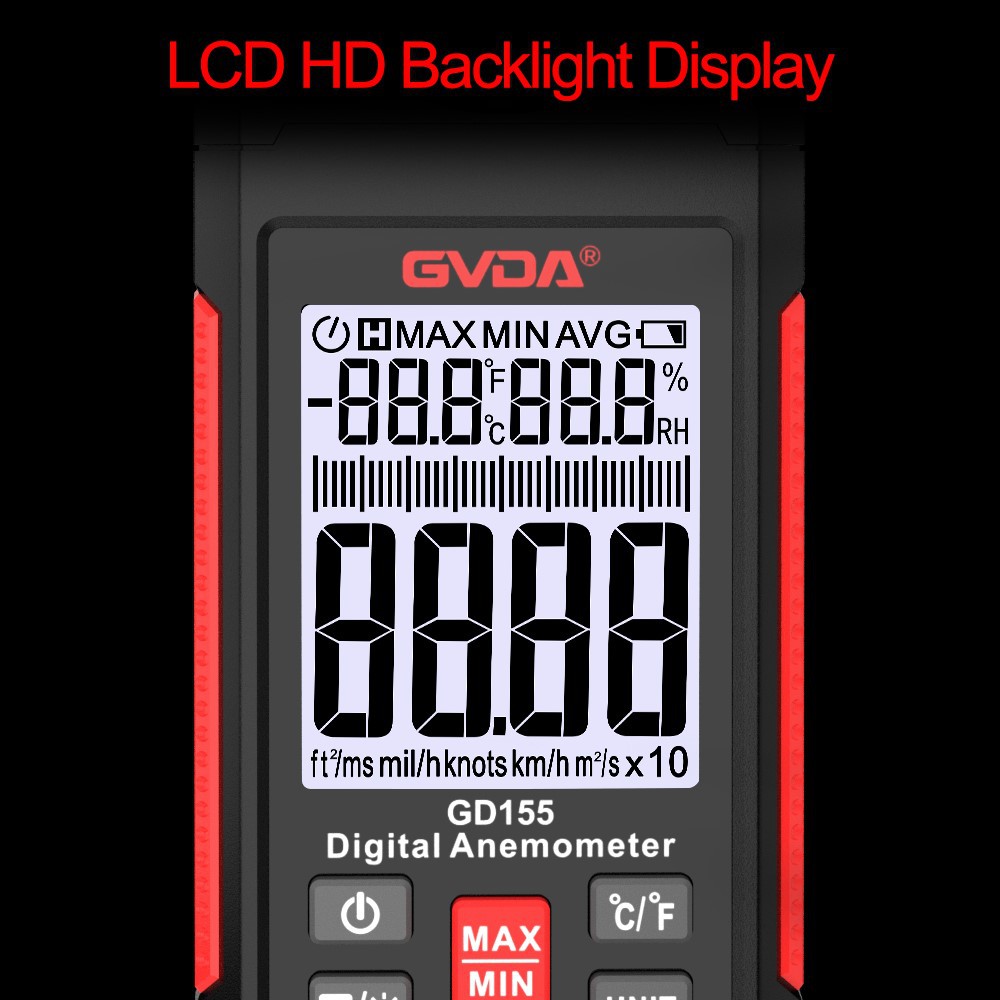
Understand how to apply an anemometer
The application of anemometers is very extensive, and they can be flexibly applied in all fields. They are widely used in industries such as electricity, steel, petrochemicals, energy conservation, etc. There are also other applications in the Beijing Olympics, such as sailing competitions, rowing competitions, field shooting competitions, etc
Both require the use of an anemometer for measurement. The current anemometers are relatively advanced, which can not only measure wind speed, but also measure wind temperature and air volume. There are many industries that require the use of anemometers, and recommended industries to use include offshore fishing, various fan manufacturing, industries that require exhaust systems, and so on.
The wind direction in the atmosphere is constantly changing due to different seasons and geographical conditions of the anemometer. If the wind direction at the seaside varies day and night, there are also different monsoon winds in winter and summer. Studying wind direction can help us predict and study climate change. Studying wind direction requires the use of an anemometer. The design of anemometers is mostly arrow shaped, and some are made into animal shapes, like roosters. The arrow feather part of the anemometer will rotate in the direction of the wind. The anemometer needs to be installed in an area where there are no buildings or trees that obstruct the movement of wind. Purpose and Scope of Application: The QDP series hot ball electric anemometer is used in various fields such as heating, ventilation, air conditioning, meteorology, agriculture, refrigerated drying, and labor hygiene investigations. It can be used to measure the airflow velocity indoors, outdoors, or in models. It is a basic instrument for measuring low wind speeds. Working principle: This instrument consists of two parts: a hot ball sensor and a measuring instrument. The head of the sensor has a small glass ball, which is filled with a nickel chromium wire coil for heating glass and two connected thermocouples. The cold end of the thermocouple is connected to a phosphor copper pillar and directly exposed to the airflow. When a certain amount of current passes through the coil, the glass ball is heated to a certain temperature, which is related to the speed of the airflow. When the flow rate is small, the temperature is higher, and vice versa, the temperature is lower.