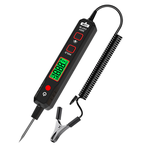
uring the soldering process with an electric soldering iron, please note the following points:
1. Keep the soldering iron tip clean. Before using an electric soldering iron, ensure that the surface of the soldering iron tip is free of impurities such as oil stains and oxides. These impurities can affect the welding effect and may even lead to virtual welding. If dirt is found on the soldering iron tip, a wet sponge or metal ball can be used for cleaning.
2. Control the welding temperature. Different metal materials and solder have different melting points, so it is necessary to adjust the temperature of the soldering iron according to the actual situation. Excessive temperature may cause damage to metal components, while excessively low temperature may result in weak solder joints. Generally speaking, the welding temperature should be slightly higher than the melting point of the solder.
3. Ensure that the solder joints are fully wetted. During the welding process, it should be ensured that the liquid solder fully wets the surface of the metal component to form a smooth welding point. If the solder joints are not fully wetted, it may lead to virtual soldering or weak soldering. To improve wettability, metal components can be preheated or flux can be used before welding.
4. Maintain appropriate welding time. Excessive welding time may cause metal components to overheat, affecting their performance; If the welding time is too short, it may lead to weak solder joints. Generally speaking, the welding time should be controlled between 2-3 seconds.
5. Pay attention to safety protection. During the welding process, direct contact with high-temperature soldering iron tips should be avoided to prevent burns. Meanwhile, the smoke generated during the welding process may be harmful to human health, so it is recommended to perform welding operations in a well ventilated environment.
In short, the welding principle of an electric soldering iron is to convert electrical energy into thermal energy, and melt the solder by heating the soldering iron tip, thereby achieving the connection of metal parts. In practical operation, attention should be paid to controlling the welding temperature, keeping the soldering iron tip clean, and ensuring that the solder joints are fully wetted to improve welding quality and safety.