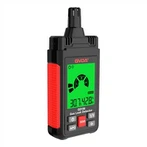
Using a moisture tester to detect wood moisture and wood properties
1、 The source and state of moisture in wood
When a live tree grows, its roots continuously absorb water from the soil, and the xylem of the tree trunk carries the water to various organs of the tree. At the same time, the nutrients produced by leaf photosynthesis are transported to various parts of the tree from the phloem of the tree trunk. Water is not only the material for tree growth, but also the carrier for transporting various substances. After living trees are cut down and sawn into various specifications of square timber, the majority of the water remains inside the wood, which is the main source of water in the wood. At the same time, wood also absorbs some water into its interior during storage, transportation, or use.
For different tree species, there are differences in the moisture content of the xylem in the trunk. Even if the same tree grows in different seasons, the moisture content of its xylem varies. The moisture content of various parts of the xylem, such as heartwood, sapwood, roots, trunk, and shoot, is also different, so the distribution of moisture in wood is very uneven. When the atmospheric conditions around wood change, its moisture content also changes accordingly. Moisture can be divided into free water, adsorbed water, and Three types of combined water: (1) Free water exists in a large capillary system composed of pits or perforations at the end of ducts on wood cell walls, cell cavities, and intercellular spaces that communicate with each other. Free water is physically bound to wood and is not tightly bound. This part of water is easy to escape from the wood and can also be easily inhaled. Wet wood is placed in dry air and the first thing to evaporate is free water. For newly felled green wood, different species of wood have free water The content varies greatly, usually between 60-70% and 200-250%.
Moisture Content of Wood and Indoor Environment
The indoor environment where people live should not have excessive fluctuations in humidity and should be stable within a certain range, which is very beneficial for personal health and object preservation. Research data shows that the relative humidity range for preventing wet mold is 0-80%; 0-70% or 80-100% for pest prevention; Save books for 40-60%; 55% -60% to prevent bacterial infection; The mortality rate is low at 60-70%, and the relative humidity of human living environment should be around 60.
There are many factors that can cause changes in indoor humidity, such as changes in external or indoor temperature, which can cause changes in humidity; The water vapor flowing in or out of the air window or air exchange, the water vapor passing through the wall, and the water vapor coming in from the kitchen can also cause changes in humidity.