What are the common equipment and selection principles of multimeters
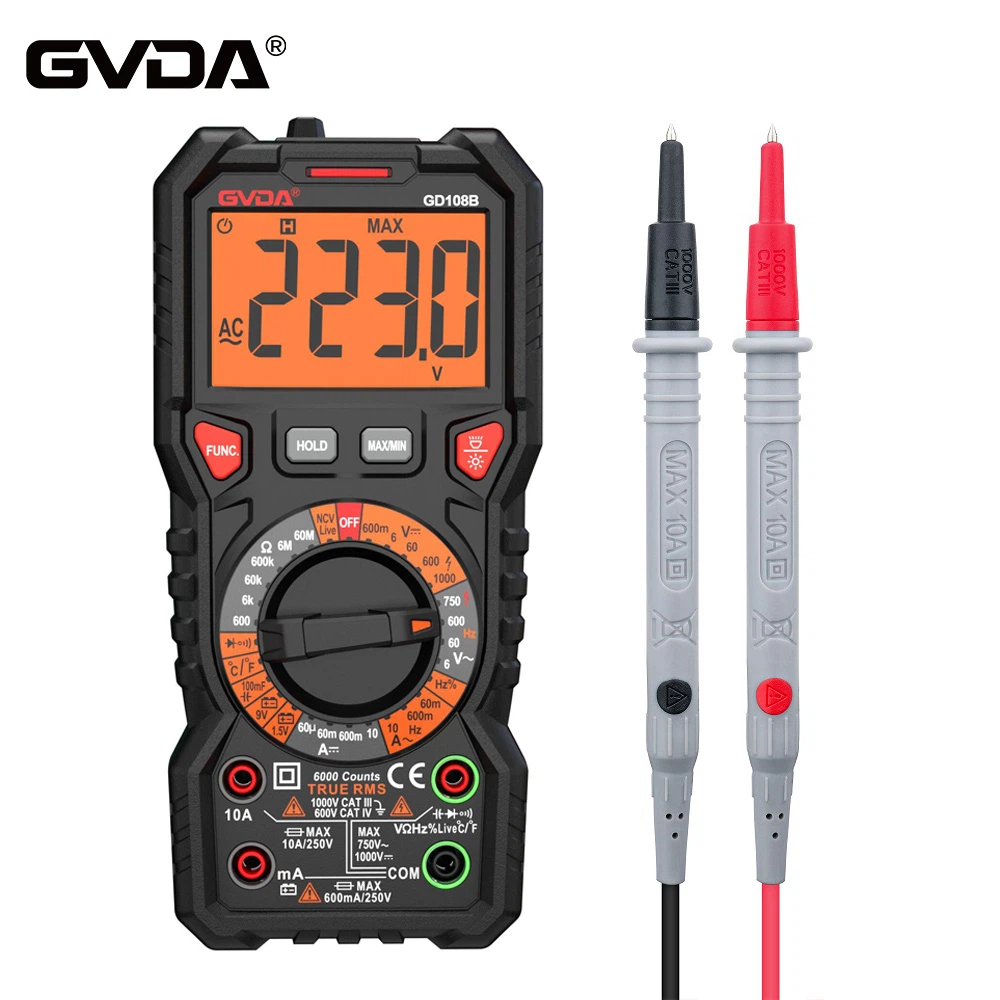
Digital multimeter is currently the most commonly used digital instrument. Its main features are high accuracy, strong resolution, perfect test function, fast measurement speed, intuitive display, strong filtering ability, low power consumption, and easy to carry. Since the 1990s, digital multimeters have been rapidly popularized and widely used in my country, and have become necessary instruments for modern electronic measurement and maintenance work, and are gradually replacing traditional analog (ie, pointer) multimeters.
Digital multimeters are also known as digital multimeters (DMMs), and there are many types and models. Every electronic worker hopes to have an ideal digital multimeter. There are many principles for choosing a digital multimeter, and sometimes they even vary from person to person. However, for a handheld (pocket) digital multimeter, it should generally have the following characteristics: clear display, high accuracy, strong resolution, wide test range, complete test functions, strong anti-interference ability, relatively complete protection circuit, and beautiful appearance , generous, easy to operate, flexible, good reliability, low power consumption, easy to carry, moderate price and so on.
Main indicators, display digits and display characteristics of digital multimeters
The display digits of a digital multimeter are usually 3 1/2 to 8 1/2 digits. There are two principles for judging the display digits of digital instruments: one is that the digits that can display all numbers from 0 to 9 are integer digits; The numerator is the numerator, and the count value is 2000 when the full scale is used, which indicates that the instrument has 3 integer digits, and the numerator of the fractional digit is 1, and the denominator is 2, so it is called 3 1/2 digits, read as "three and a half digits ", the highest bit can only display 0 or 1 (0 is usually not displayed). 3 2/3 digits (pronounced "three and two-thirds digit"), the highest digit of the digital multimeter can only display numbers from 0 to 2, so the maximum display value is ±2999. Under the same conditions, it is 50% higher than the limit of a 3 1/2 digit digital multimeter, which is especially valuable when measuring 380V AC voltage.
Popular digital multimeters generally belong to handheld multimeters with 3 1/2 digits display, and 4 1/2, 5 1/2 digits (less than 6 digits) digital multimeters are divided into handheld and desktop. More than 6 1/2 digits mostly belong to desktop digital multimeters.
The digital multimeter adopts advanced digital display technology, with clear and intuitive display and accurate reading. It not only ensures the objectivity of the reading, but also conforms to people's reading habits, and can shorten the reading or recording time. These advantages are not available in traditional analog (ie pointer) multimeters.
selection principle
1. The reading accuracy of the pointer meter is poor, but the process of the pointer swing is more intuitive, and its swing speed range can sometimes objectively reflect the size of the measured (such as measuring the slight jitter); the reading of the digital meter is intuitive, but the process of digital change looks messy and not easy to watch.
2. There are generally two batteries in the pointer meter, one is low voltage 1.5V, the other is high voltage 9V or 15V, and the black test lead is positive terminal relative to the red test lead. Digital meters usually use a 6V or 9V battery. In the resistance mode, the output current of the test pen of the pointer meter is much larger than that of the digital meter. The loudspeaker can make a loud "da" sound with the R×1Ω gear, and the light-emitting diode (LED) can even be lit with the R×10kΩ gear.
3. In the voltage range, the internal resistance of the pointer meter is relatively small compared with the digital meter, and the measurement accuracy is relatively poor. Some occasions with high voltage and micro current cannot even be measured accurately, because its internal resistance will affect the circuit under test (for example, when measuring the acceleration stage voltage of a TV picture tube, the measured value will be much lower than the actual value). The internal resistance of the voltage range of the digital meter is very large, at least in the megohm level, and has little effect on the circuit under test. However, the extremely high output impedance makes it susceptible to the influence of induced voltage, and the measured data may be false in some occasions with strong electromagnetic interference.
4. In short, pointer meters are suitable for the measurement of analog circuits with relatively high current and high voltage, such as TV sets and audio amplifiers. It is suitable for digital meters in the measurement of low-voltage and low-current digital circuits, such as BP machines, mobile phones, etc. It is not absolute, and pointer tables and digital tables can be selected according to the situation.