What are the differences between anemometers?
On site anemometer measurement can be divided into three types based on principle: pressure difference type, impeller type, and hot ball type:
The differential pressure method is a classic method for measuring flow velocity in fluid mechanics, which mainly relies on Pitot tubes and differential pressure gauges to measure the dynamic pressure, and then calculates the flow velocity based on the Bernoulli equation.
The advantages of this method are low detection limit, high sensitivity, but high requirements for uniformity of the convection field;
When measuring in the environment, it is easy to be inaccurate due to uneven flow fields, so the pressure difference method is mainly used to measure wind speed in ducts.
The main principle of the hot ball type is that the probe is set to a constant temperature, and air passing through the probe will carry away heat;
At this point, the probe will be heated to the set temperature, and during this process, electrical signals will be collected by the instrument and converted into wind speed based on this.
The advantages of this method are high sensitivity, large range, and adaptability to environmental measurement. The disadvantage is that the platinum wire connecting the hot ball in the probe is relatively fragile, and if not careful during use, it can easily cause damage to the probe and cannot be repaired.
At present, the domestic hot ball anemometer is still an old-fashioned anemometer, and the Air Conditioning Institute of the Construction Research Institute has a more advanced alternative technology, replacing the hot ball with a ceramic hot column, which has much better strength than the hot ball.
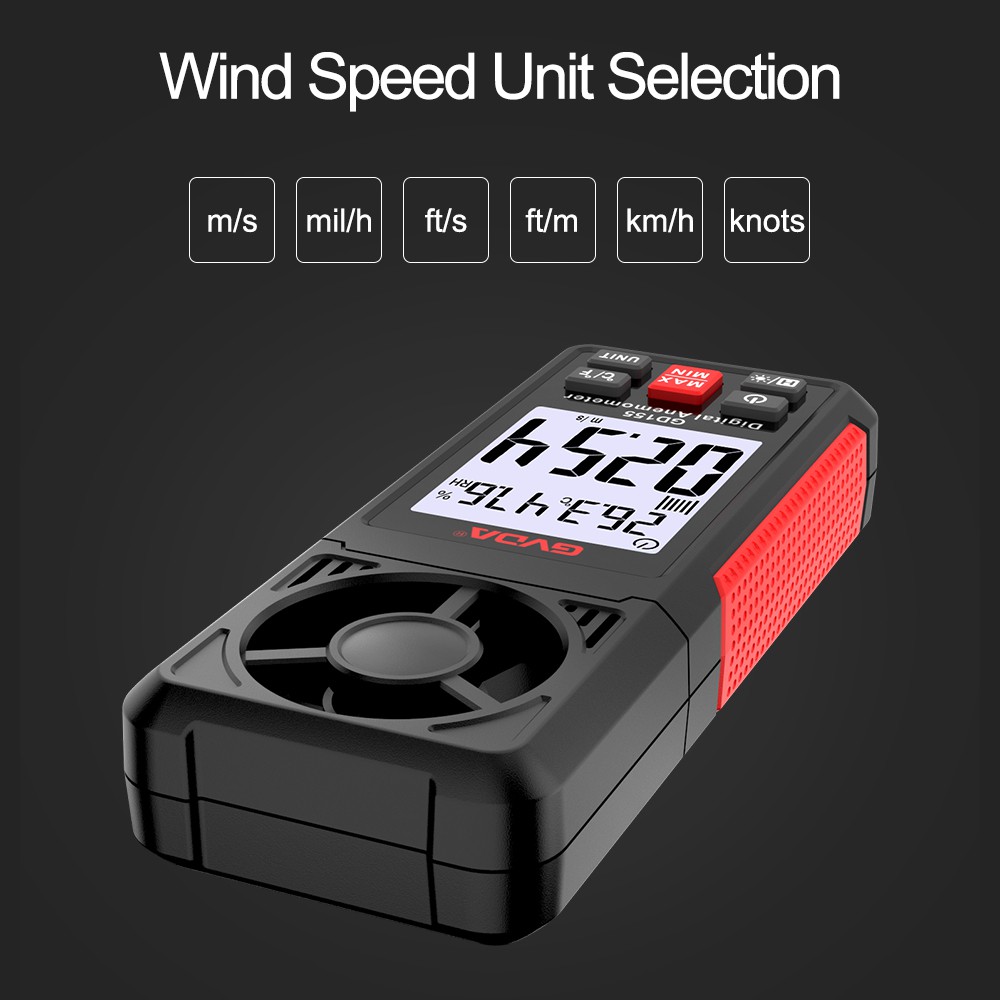
The impeller type mainly relies on wind to rotate the impeller, generating electromagnetic signals for measurement. The advantage of this method is that the instrument is relatively durable;
Commonly used for long-term measurements, the three cup anemometer used in meteorological observations also shares the same principle, with the disadvantage of slightly lower sensitivity.