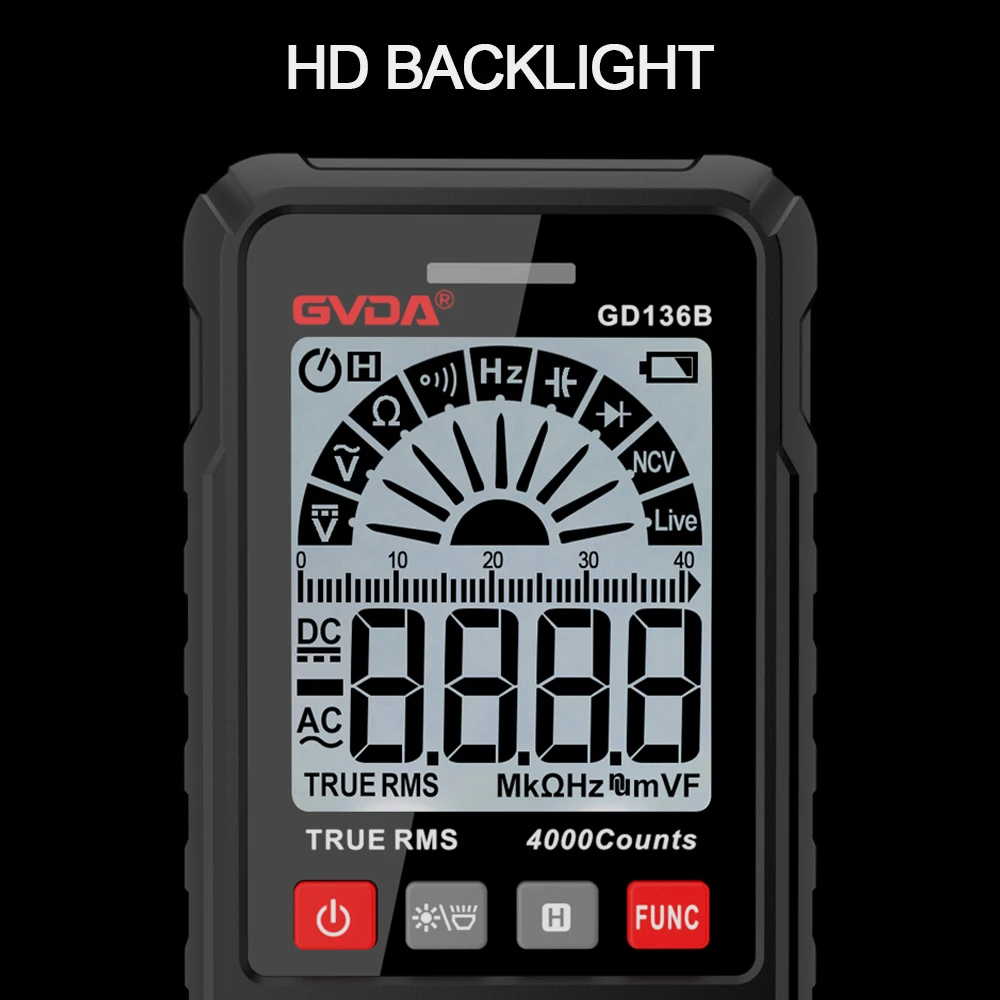
What are the effective values of the multimeter?
The effective value of a multimeter usually refers to one of the following three situations:
1. The method of calibrating the average value, also known as the corrected average value or the rectified average value calibrated to the effective value, is based on the principle of converting an AC signal into a DC signal through rectification and integration circuits, and then multiplying it by a coefficient according to the characteristics of a sine wave. For a sine wave, the result of multiplying by this coefficient is equal to the effective value of the sine wave. Therefore, this method is limited to sine wave testing only.
2. Peak detection method obtains the peak value of an AC signal through a peak detection circuit, and then multiplies it by a coefficient based on the characteristics of a sine wave. For a sine wave, the result of multiplying by this coefficient is equal to the effective value of the sine wave. Therefore, this method is limited to sine wave testing only.
3. The true effective value method uses a true effective value circuit to convert AC signals into DC signals before measurement. This method is applicable for testing the true effective value of any waveform.
Most multimeters use the first two methods. And there are significant limitations on the frequency of the signal.
General maintenance and upkeep
1) Regularly clean the casing of the instrument with a damp cloth and neutral cleaning agent, and do not use abrasives or solvents. Dirt on the terminals and probe terminals can affect the reading, and cleaning agents can be used to clean the dirt on each terminal.
2) When not in use, press the POWER button to turn off the power, and remove the battery for long-term use.
3) Storage of instruments should avoid moisture, high temperatures, and strong magnetic fields.