What are the factors for choosing an infrared thermometer?
The following factors should be considered
a) Type
According to on-site requirements, players can hold (portable) or fixed (online).
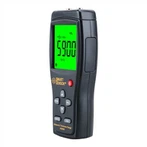
Features of handheld thermometer: small size, light weight, battery powered, suitable for carrying around, and can detect and record temperature at any time. It has optical or laser aiming devices, and the operation is very simple. With just a gentle pull of the trigger, temperature measurement can be carried out.
Fixed thermometer features: fixed installation on industrial sites, capable of 24-hour continuous monitoring, connected to a computer, and closed-loop control. Equipped with protective sleeves and air and water cooling devices, it can work in harsh environments and high temperature conditions of 315 ℃.
b) Temperature measurement range
The range of the thermometer should meet the usage requirements.
c) Distance coefficient
The distance coefficient D: S is the ratio of the distance between the thermometer and the measured object to the diameter of the measured object. The larger this coefficient, the higher the optical resolution of the thermometer. A thermometer that measures the same object with a larger distance coefficient can be used to measure at a greater distance.
Generally speaking, thermometers with large distance coefficients have high sensitivity and higher prices.
d) Minimum target
When the measured object is small, it is necessary to consider whether the small measurement target of the thermometer can meet the usage requirements.
The following are three temperature measurement techniques for non-contact thermometers:
Point measurement: Measure the overall surface temperature of an object, such as temperature difference measurement of an engine or other equipment. Compare the measured temperatures of two independent points, such as connectors or circuit breakers. Scan measurement: Detect changes in targets over a wide or continuous area. Like refrigeration pipelines or distribution rooms. The main consideration for choosing an infrared thermometer is the temperature range: each model of thermometer has its own specific temperature range. The temperature range of the selected instrument should match the specific application temperature range.
Target size: When measuring temperature, the measured target should be larger than the field of view of the thermometer, otherwise there will be measurement errors. Suggest that the size of the measured target exceeds that of the thermometer
50% of the field of view is good. Optical resolution (D: S): refers to the ratio of the thermometer probe to the target diameter. If the thermometer is far from the target and the target is small, a high-resolution thermometer should be chosen.