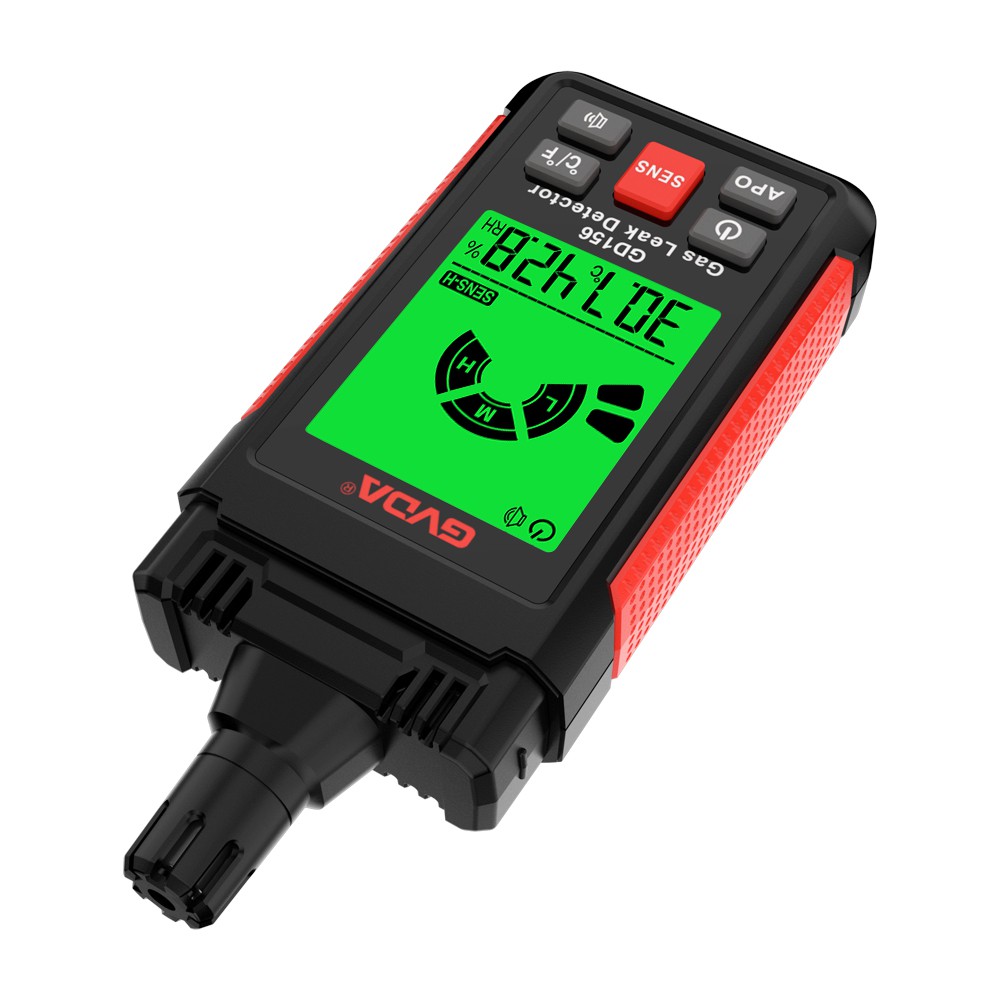
What are the gas detector detection standards?
Gas detectors can help our staff to check whether the flammable and toxic gases in the working environment exceed the standard value, and can also detect whether the flammable and toxic gases in the equipment or pipelines are leaking. The detected concentration can reach the PPM level or even lower. Then What are the detection standards for gas detectors?
Appearance and functional inspection
1. Check the appearance and other items
Checking the appearance is the first thing we do after purchasing the gas detector. This is to avoid minor problems in the transportation or assembly process of the gas detector. We need to check whether the appearance of the gas detector is flawed, cracked or damaged. , Check whether the entire structure of the gas detector is complete.
At the same time, check the machine model, label, manufacturer name, and delivery time on the gas detector body and check with the manual or the information given by the manufacturer to ensure accuracy. At the same time, check the explosion-proof mark, measurement license mark and The number and other contents must be complete and clear, and some certificates can be provided by the manufacturer;
2. Power-on inspection
The gas detector needs a power supply to work, and it is usually powered by a built-in battery. We need to turn on the switch to check whether the gas detector is powered on normally. Some gas detectors continue to work by replacing the battery, and some gas detectors The detector is equipped with a charger. For a gas detector equipped with a charger, we need to test whether the charger is charged normally. When the power is normal, we need to check whether the display screen of the gas detector is normal;
3. Check whether the sound and light alarm of the instrument is normal
For gas detectors with sound and light alarm signals, because they are powered by batteries, when the undervoltage is displayed, they should be able to send out sound or light indication signals that are clearly different from the alarm signal;
Indication error
The gas detector we bought is used to detect the gas concentration. The gas detector cannot be very accurate in displaying the gas concentration. It has errors, but this error has a range. If it exceeds this range, it will be It shows that this gas detector does not meet the standard, and the indication error specified by it is different for different gases. For example, it is normal for the indication error of oxygen to be within ±0.5%VOL;
Alarm error
We mentioned the error of the displayed value above, so there is a certain allowable error for the alarm value of the gas detector, because the instrument will be affected by various factors, it is impossible to alarm at an accurate concentration every time, Therefore, the concentration of the alarm is allowed to have errors, as long as the error is within the standard range, the alarm error is different for different gases, for example, the alarm error of oxygen is within ±0.1%VOL;
Response time
Response time refers to the time required for the indication value of the gas detector to rise from zero to 90% of the stable indication value that the instrument should reach. This time is also required by the standard. This standard is the same as the indication error and the alarm error. The response time of different gases is different, for example, the response time for oxygen is less than or equal to 20S;
Dielectric withstand voltage
For gas detectors, there are some insulation withstand voltage standards that must be met. The standard requirements are ≥100MΩ at room temperature and ≥1MΩ after damp heat. The insulation strength should be able to withstand 500V AC voltage for lmin, and discharge and breakdown should not occur. These Only after they are met can it be said that the gas detector meets the standard.