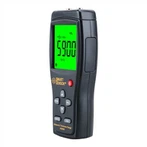
What are the resistance levels in a multimeter
1. The range of measuring resistance is to select the appropriate range for measuring resistance, resulting in smaller measurement errors and higher accuracy.
If you are a 1000 ohm resistor, the value measured using the 2000 gear is more accurate than using the 20K gear. This means that the closer the resistance value you measure is to that gear, the higher the accuracy of the measured value.
2. Use 200 gears for 0-200 Ω; Use 2000 gear for 200-2000 Ω; Use 20K gear for 2000-20k; Use 200K gear for 20K-200K;
Operating standards
1. Before use, familiarize yourself with the various functions of the multimeter, and correctly select the gear, range, and probe socket according to the object being measured.
2. When the size of the measured data is unknown, the range switch should be set to the maximum value first, and then switched from the large range to the small range range, so that the instrument pointer indicates more than 1/2 of the full scale.
3. When measuring resistance, after selecting the appropriate magnification range, touch the two probes to make the pointer point to zero. If the pointer deviates from zero, adjust the "zero adjustment" knob to make the pointer return to zero to ensure accurate measurement results. If the zero cannot be adjusted or the digital display meter emits a low voltage alarm, it should be checked in a timely manner.
4. When measuring the resistance of a certain circuit, the power supply of the tested circuit must be cut off and live measurement is not allowed.
5. When using a multimeter for measurement, attention should be paid to personal and instrument safety. During testing, it is not allowed to touch the metal part of the probe with hands, and it is not allowed to switch the gear switch with electricity to ensure accurate measurement and avoid accidents such as electric shock and instrument burnout.