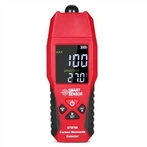
What do the units on the gas detector mean?
(1) %VOL (gas concentration volume ratio): detect oxygen and carbon dioxide, and use this unit to directly read the value.
(2) %LEL (lower explosion limit): refers to the lowest concentration at which an explosion occurs when a combustible gas is mixed with air and encounters the minimum ignition energy.
Portable gas detectors usually set an alarm point: below 25% LEL of the lower explosion limit.
For example, the lower explosion limit of methane is 5% VOL, that is, 5% VOL is divided into one hundred equal parts, corresponding to 100% LEL. When the detector value reaches the 25%LEL alarm point, it is equivalent to the concentration of methane at this time is 5%VOL*25%=1.25%VOL.
There is still a long way to go from the 5% VOL, the lower limit of methane explosion, so don't worry about the danger after calling the police, this is just a reminder to take corresponding measures immediately.
Such as closing the valve, dispersing the gas, etc., which play the role of alarm reminder. If the value reaches 100% LEL, you should pay attention at this time, indicating that you have reached the value of 5% of the lower limit of the methane explosion concentration, which is very dangerous.
(3) PPM: PPM is the abbreviation of English part per million, which means parts per million, and volume concentration (ppm), which means the volume of pollutants contained in one million volumes of air.