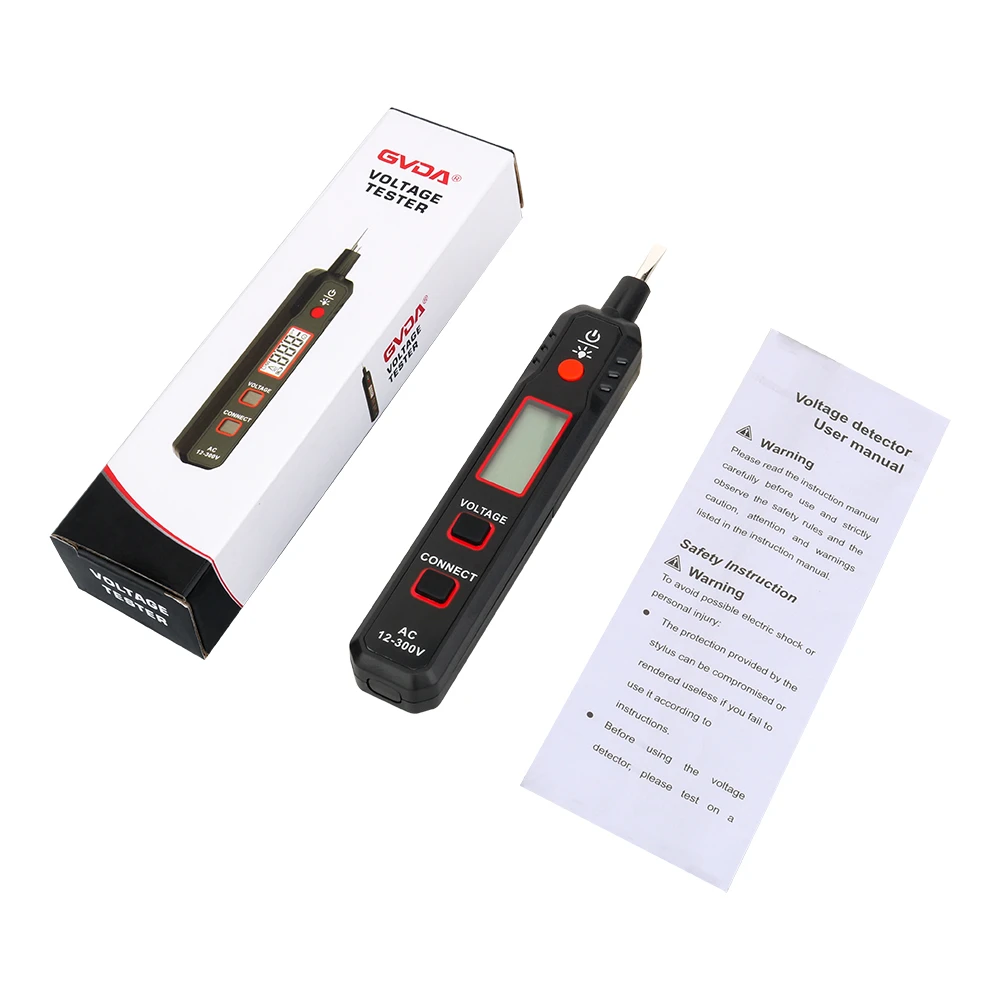
What happens if both the live wire and the electric test pen are damaged?
Neon tubes, springs, and high-resistance resistors are typically found within test pens. This high-resistance resistor, which is connected to the neon tube in series, often has resistance at the M level. The neon tube and the human body are both affected by the current. The likelihood of the resistor being damaged is extremely low, but if there is a fault, such as inadequate contact between the resistor, neon tube, and spring, and if the fault is unknown, use the electric pen to check for excessive AC voltage in the electrified body.The neon tube won't light up at this point (or it will be extremely dimly lit), and the user will make a mistake that will result in an electric shock. Additionally, using the test pen to measure AC220V voltage is susceptible to electric shock mishaps if water has unintentionally entered the interior and the interior is relatively humid. As a result, you should check the test pen's condition before using it. No issues, use it once more.In order to measure the AC high voltage when fixing the AC220V line, it is preferable to use the digital multimeter's AC voltage range due to the simple test pen's lower dependability.
To determine the neutral wire and the live wire when using a digital multimeter in place of a test lead, set the range switch to the AC 200V voltage range, touch the black test lead to a wall or the ground, and the red test lead to the appropriate two wires. When the red test lead makes contact with the zero line, the multimeter shows a very low voltage that is very close to zero volts; nevertheless, when the red test lead makes contact with the live wire, the value is typically more than tens of volts. Using this method to detect AC high voltage is safer than using an electric pen because current will be passing through a human body.
①Very dangerous!
However, the risk does not exist when using a test pen to measure the live wire. Solid-core resistors, sometimes referred to as volume resistors, are the high-resistance resistors used in test pens. These resistors come in two varieties: organic synthetic solid-core resistors and inorganic synthetic solid-core resistors. This kind of resistor is created by combining and pressing granular conducting materials, fillers comprised of non-conductive powder, and binders.Carbon black and graphite are conductive granular materials, while mica powder, quartz powder, glass powder, titanium dioxide (titanium dioxide powder), etc., are non-conductive powder materials. Some adhesives employ organic adhesives, while others use inorganic adhesives. According to the type of glue, the two types of organic solid core resistors and inorganic solid core resistors listed above can be separated. This kind of resistor is highly reliable, has a good resistance to overload, and is difficult to damage. When damaged, it will also display an open circuit state, which means that even though the neon tube is undamaged, it won't light up, but the person using the electric pen to measure the live wire won't experience an electric shock.
3When the live wire is energized but the test pen's resistor is destroyed and mistakenly reports that there is no power, there is a risk of electric shock. People could accidentally touch a live wire and receive an electric shock.
There are two possible outcomes if the electric pen's resistance breaks (most often a solid-pressed resistance with a resistance value of several M):
One is disconnection (this frequently occurs), when the electric circuit is cut off after the resistance is cut off and the test pen's neon bulb experiences no current and no illumination, making it simple to mistakenly believe that the circuit being tested has been electrified;
The second scenario is a short circuit, which is uncommon. Due to the high voltage for a brief period (the neon bulb's usual working voltage is 70V), the test pen's neon tube malfunctions. The neon tube currently serves as insurance and does not endanger humans.