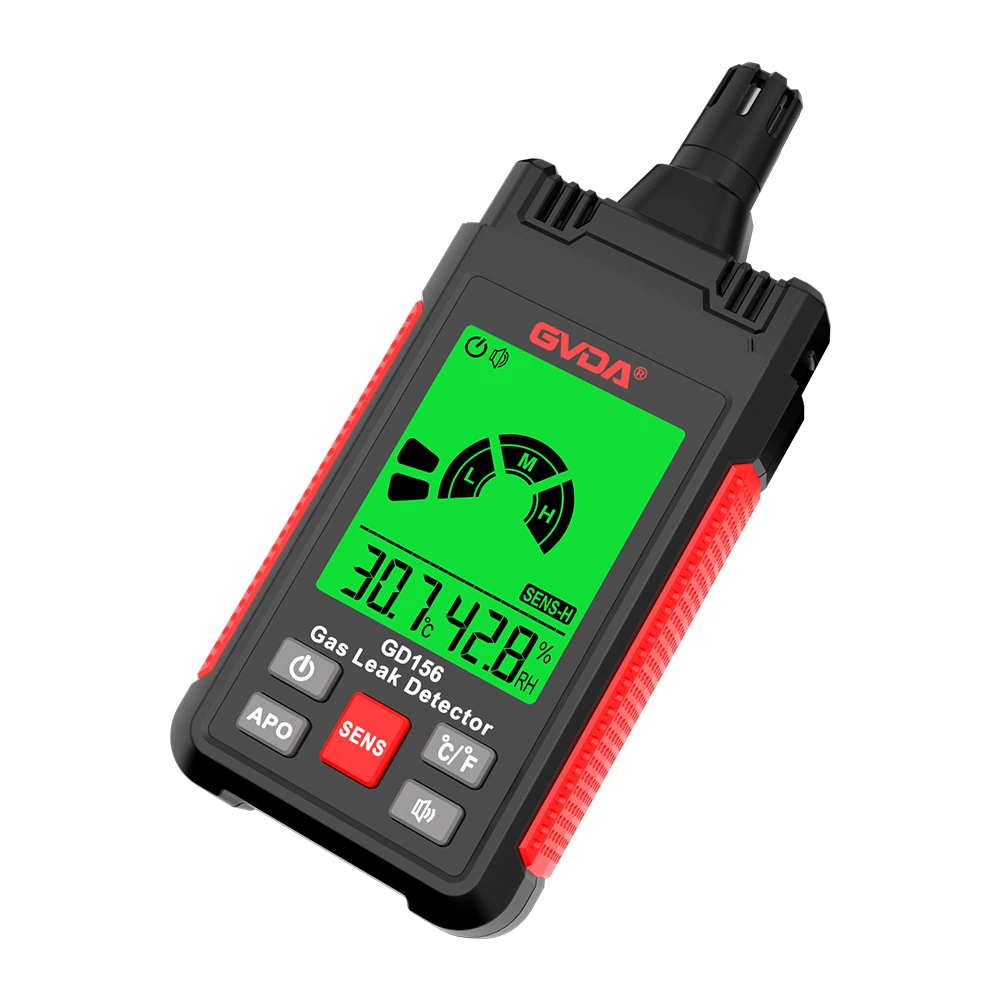
What principle sensor is good for combustible gas detectors?
Combustible gas detector sensor technology principle classification:
1. Semiconductor sensor
In industry, combustible gas detectors rarely use the principle of semiconductor sensors. Because the detection limit of the semiconductor combustible gas detector is low and the service life is long, and there are only gas adsorption and desorption processes in the detection process, serious oil fumes in the kitchen rarely remain on the surface of sensitive materials, which will not affect the actual service life. Makes an impact and is the best choice for home alarms. In domestic places, it is usually required to be able to quickly detect when the concentration of combustible gas leakage is low, and it is enough to realize a single point alarm, and it must be able to meet the requirements of long-term maintenance-free and convenient for home use.
2. Catalytic combustion sensor
Catalytic combustion combustible gas detector is a principle widely used in the mainstream market at present. It has a fast response speed. Up to the lower explosion limit concentration (LEL), the output of the sensor is almost proportional to the gas concentration, so the accuracy and repeatability are very high. . Therefore, the catalytic combustion combustible gas detector is suitable for quantitative detection in coal mine, petroleum, chemical industry, gas and other fields. However, the working temperature of catalytic combustion sensors is high, and the catalyst is easily deactivated. At the same time, the silicone and sulfide released from adhesives and rubber products in the surrounding environment can easily poison the catalyst and cause the sensor to fail. In industrial places, the standard gas is generally used to regularly calibrate the alarm and adjust the magnification to prevent the sensitivity of the catalytic sensor from degrading and causing a large decrease in accuracy.
3. Infrared sensor
The infrared combustible gas detector uses the principle of non-dispersive infrared (NDIR) to detect hydrocarbon combustible gases in the air. It has the advantages of good selectivity, strong anti-interference ability, and not easy to be poisoned. Has played an important role in industrial safety and gas detection for many years.
4. Electrochemical sensor
Combustible gas detectors use the principle of electrochemical sensors, which are usually used to measure toxicity, such as the detection of low-concentration carbon monoxide in artificial gas and incomplete combustion. Due to the high toxicity of carbon monoxide, the alarm point generally does not exceed 200ppm. In order to prevent misuse Alarm or leak alarm, combustible gas detector is best to use electrochemical gas sensor with high sensitivity and precision.