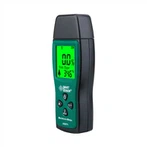
What problems could the gas detector encounter?
Gas detectors are designed to help make safety decisions easier for you. New "smart" features not only provide clear gas detector status and sensor information, but also provide reminders of what to do after an alarm. This saves you the trouble of interpreting gas detector alarm readings.
But with so many features available, it's still hard to figure out what's really important and what can make you safer at work? In order to make you safer, then your gas detector must have seven functions.
1. Correct reading
To start with the basics, if you are in an environment where gas hazards may be present and you are looking for a gas detector. Therefore, the detector you need to choose needs to be able to detect these gases and display the gas concentration value correctly.
Before configuring a suitable gas detector, first answer the following questions:
• What gas hazards exist in your place of use?
• How many gases do you need to monitor simultaneously?
• Are there any other gases causing cross-interference?
Although there is no multi-purpose gas detector on the market that can detect all potential gas hazards, personal multi-gas detectors are already developing towards this trend. Find the right sensor to help detect the gases you may encounter or the presence of potentially hazardous gases.
2. Meet the requirements of personal protective equipment
To accurately measure gas exposure, your gas detector must be able to detect according to national safety regulations. For example, if ammonia gas (NH3) is present on site, the gas detector must be able to detect ammonia in concentrations greater than 300 ppm. However, many gas detectors can only measure ammonia from 0-100 ppm. This begs the question. How can you tell if your PPE is providing adequate protection if the equipment is not capable of exceeding 300 ppm?
To avoid this problem, choose a gas detector with a measurement range that meets the requirements for personal protective equipment. This is especially critical if you are looking for a gas detector to detect ammonia (NH3), hydrogen sulfide (H2S), sulfur dioxide (SO2) or carbon monoxide (CO) on-range.
3. Flexibility to meet application requirements
Most multi-gas detectors are available in pump and diffusion versions - but these two versions cannot be switched at will, that is, you can use the diffusion version for personal protection, but you cannot use it for sampling in confined spaces detection.
Pumped gas detectors draw gas from an unknown, potentially toxic or flammable gas environment into the detector to determine if the area is safe. It's actually the pump that keeps you out of harm's way. Do not enter the target confined space to perform any work tasks until the air sample is evaluated with a pump-aspirated gas detector and confirmed to be free of any toxic or flammable gases. However, the pump does not increase the detection range or efficiency of the gas detector. Gas detectors will only detect gas that passes through the sensor. The pump in the gas detector does not increase the amount of gas sensed by the sensor. The pump is convenient for you to sample and detect unknown spaces in a long distance.
4. Status warning and maintenance reminder
Next-generation multi-gas detectors feature pre-programmed maintenance reminders, such as “bump test due” or “calibration due” pop-ups on the screen automatically, so you can take the guesswork out of whether the detector is ready for use.
5. Alarm behavior prompt and full screen alarm
When your gas detector goes off, you need to know what to do right away. If the detector can communicate prompts for correct operation, you will be able to make safer choices easily and quickly. Customized alarm operation messages such as "evacuate" or "wear air call" echo the alarm setting value, so that you can take correct measures in emergency situations.
Full screen alarm can display alarm information on the entire display screen. This prompt allows you to focus on the gas that triggered the alarm without being distracted by non-critical readings. The more sensor information, the more it needs to be interpreted, which increases response time, but in the face of danger, every second counts.
6. Wireless interconnection function
The point-to-point wireless interconnection function connects nearby gas detectors to a network, and automatically shares gas readings, alarm data, etc. When a gas detector goes into alarm, peer-to-peer wireless connectivity within the gas detector ensures that everyone in the group has the information they need to act quickly without guesswork.
Whether an instrument alarm is triggered by a gas hazard, a fainting or a panic situation, all members of the wirelessly connected team know immediately who is at risk and why. Workers can even get readings from guarded area monitors so they know if a gas hazard is spreading to their work area.
This capability is critical for confined space applications. It has been reported that more than 60% of fatal accidents in confined spaces are caused by rescuers blindly trying to save team members, because people in the confined space cannot communicate the danger to the outside. Connecting gas detectors through point-to-point wireless interconnection enables everyone to obtain the information they need and make the right decision to save lives.
7. Support real-time monitoring
Think about what you want and need gas detectors to do in the next four to eight years? The Industrial Internet of Things has enabled a boom in wireless, connected gas detectors, which could become a standard in the next decade.