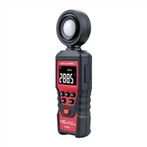
What problems should be paid attention to when measuring the pH of a solution with an acidity meter?
1. When measuring the pH value of the solution, insert the pH electrode, reference electrode, and power supply into the corresponding sockets respectively.
middle. Move the function switch to the pH position.
2. After the instrument is powered on and preheated for 30 minutes (the longer the preheating time is, the more stable it is), insert all electrodes into the pH6.86 standard buffer solution (the first type), balance for a period of time (mainly considering the balance of electrode potential), and then read After stabilization, adjust the positioning adjuster so that the instrument displays 6.86.
3. After rinsing the electrode with distilled water and drying it with absorbent paper, insert it into the pH4.01 standard buffer solution (second type), after the treatment reading is stable, adjust the slope regulator to make the instrument display 4.01. The instrument is calibrated. In order to ensure the accuracy, the above 2 and 4 are recommended. The two calibration steps were repeated one or two times. Once the instrument has been calibrated, the "Position" and "Slope" adjusters must not be altered in any way.
4. After rinsing the electrode with distilled water and drying it with absorbent paper, it is inserted into the sample solution for measurement. When measuring alkaline solutions, use pH6.86 standard buffer solution (first type) and pH9.18 standard buffer solution (second type) to calibrate the instrument. In order to ensure the measurement accuracy of pH value, a standard solution must be added for calibration before each use. Note that the temperature and state of the standard solution (still or flowing) and the temperature and state of the measured liquid should be as consistent as possible during calibration. In the course of use, the instrument must be re-calibrated when encountering the following situations: ① Change to a new electrode; ② The "positioning" or "slope" adjuster has changed.