Why do pH electrodes have to be calibrated regularly?
After the pH electrode is used for a period of time, the asymmetry potential will change greatly, so it must be calibrated regularly.
The frequency of pH electrode calibration and calibration depends on the sample, electrode performance and accuracy requirements for measurement. For high-precision measurement (≤±0.03 pH), it should be calibrated in time; for general precision measurement (≤±0.1pH), it can be used continuously for two weeks or even longer after one calibration. Frequent calibration of the electrode is absolutely unnecessary as long as the measurement shows that the pH is accurate.
Before pH electrode calibration, test the standard solution that is close to the measured solution, and determine whether recalibration is required according to the error size. In the following cases, it must be recalibrated:
pH electrodes used for a long time are based on new electrodes.
After the pH electrode measures concentrated acid (pH < 2), or after measuring concentrated alkali (pH > 12).
After the pH electrode measures solutions containing fluoride or concentrated organic solutions.
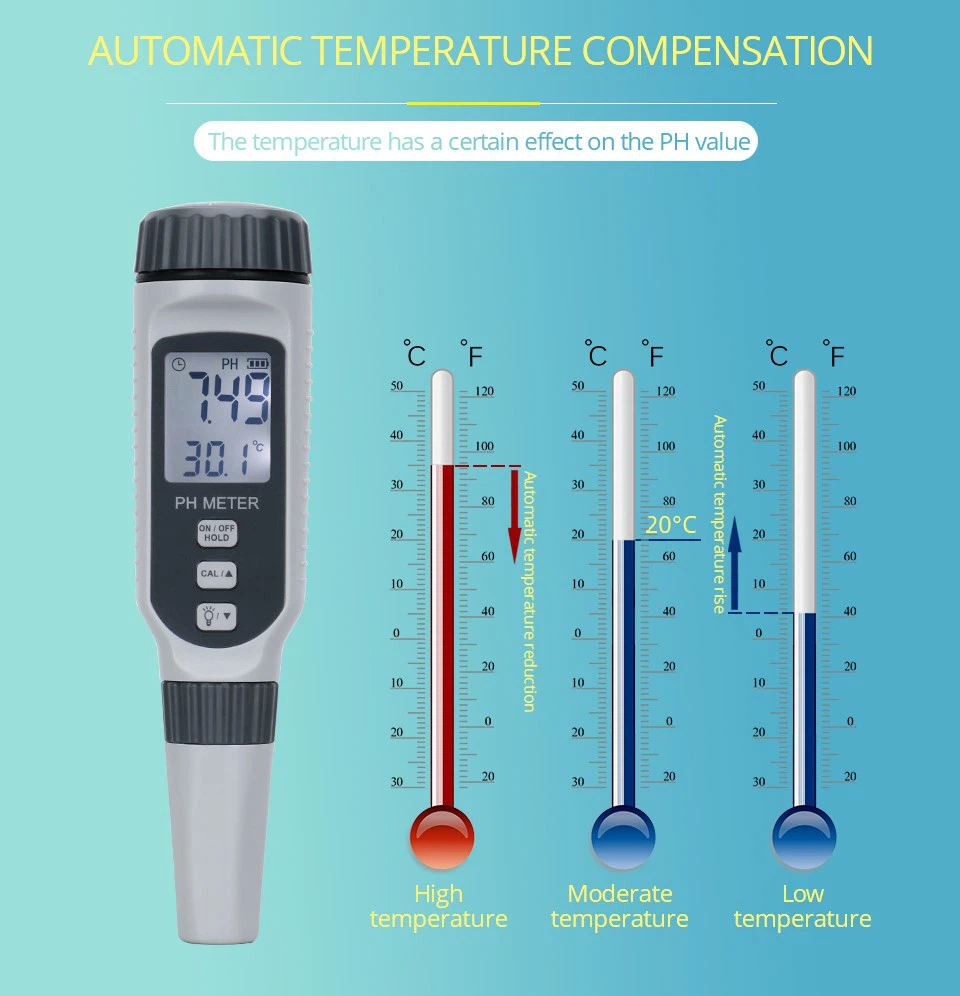
When the measured solution temperature of the pH electrode is too different from the standard solution temperature (or room temperature).