Why do pH meters use metal antimony electrodes? What are the advantages?
Antimony electrode is an oxidation-reduction electrode. When the surface of metal antimony comes into contact with the measured solution, the surface is oxidized to form Sb2O3. The potential difference between metal antimony and oxide depends on the concentration of Sb2O3, and the concentration of Sb2O3 is related to the concentration of hydrogen ions in the solution. Therefore, the pH value of the solution can be measured by measuring the potential difference between antimony and antimony trioxide. To ensure continuous measurement of the pH value of the solution, the dirt and oxide on the surface of the metal antimony electrode in contact with the measured solution should be cleaned at any time to keep the fresh surface of the metal antimony electrode in contact with the measured solution, thereby forming a new layer of Sb2O3 thin surface. This is repeated. Repeated such operations can maintain the measurement accuracy of the solution pH value.
The advantages of antimony electrodes include simple manufacturing, fast response, and ease of online measurement by industrial pH meters. They can be applied to solutions containing cyanide, sulfides, reducing sugars, alkaloids, and aqueous alcohol; The drawback is that the measurement accuracy of the metal antimony electrode is not high. When the pH is between 2 and 7, its linearity is within ± 0. Within 01pH, if pH=7-12, the deviation reaches 0. 4-0. 5pH. The slope of the pH mV of the metal antimony electrode varies in alkaline solutions, indicating a linear difference in the conversion coefficient. The pH mV conversion temperature coefficient is not a constant and exhibits a nonlinear relationship. Table 1-1 shows the pH mV conversion characteristics of the metal antimony electrode in three standard buffer solutions and its relationship with solution temperature (this data range is mainly listed for oilfield wastewater).
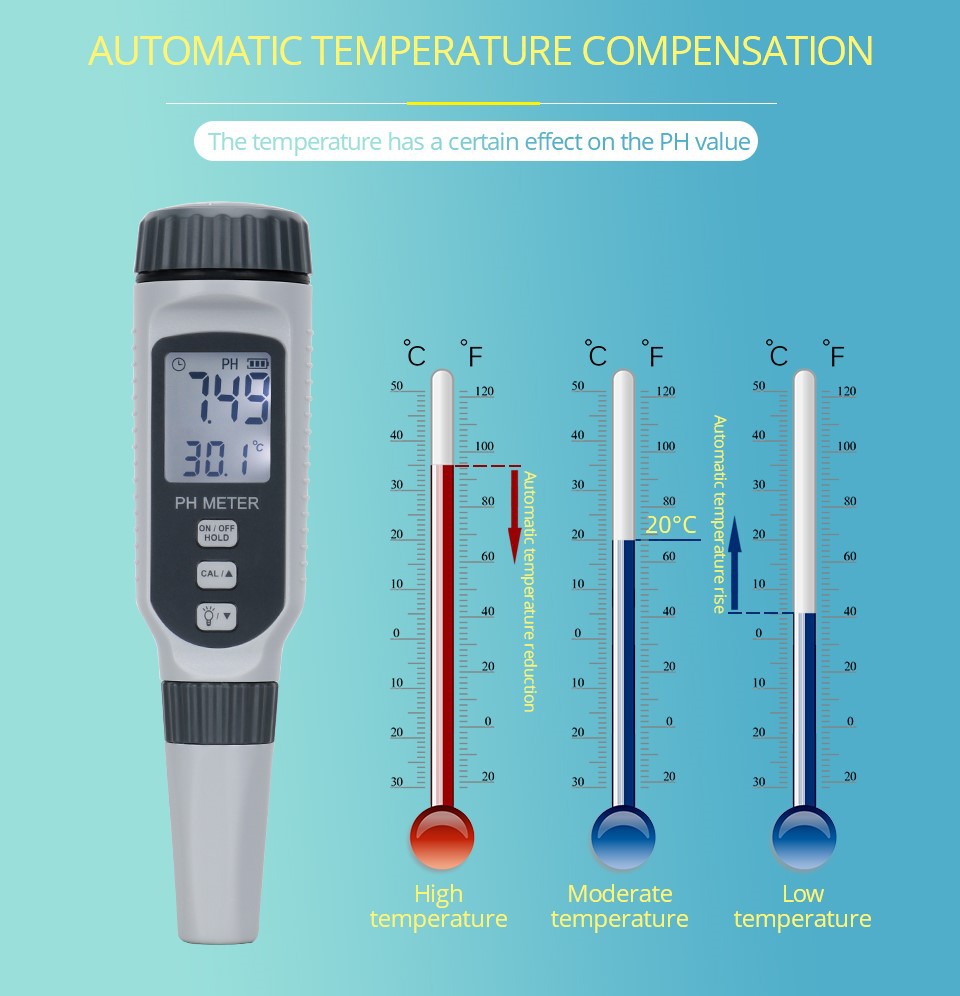
There is a significant measurement error in alkaline solutions, and the measurement error increases with increasing temperature. Research has shown that this is mainly due to the significant influence of temperature on the potential of Sb2O3, and the degree of influence varies at different temperatures. Therefore, it is not only necessary to compensate for temperature, but also for the temperature change coefficient. Due to the strong temperature effect of metal antimony electricity and the lack of a fixed theoretical formula, when using computers for data processing, efforts are made to accurately reflect the true value through various compensation methods. After calculation using the Nernst formula, combined with temperature compensation, the pH value of the solution can be easily obtained.