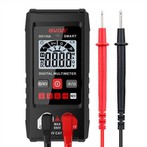
Why does a moisture meter require a quantitative moisture reading?
Differences between qualitative and quantitative moisture readings
1. The quantitative moisture reading represents the moisture content of the sample material, which is achieved by using a moisture meter that has been specially calibrated to test the moisture in the material. For example, the humidity reading provided by the wood moisture meter when testing wood, or the humidity reading provided by the dry wall moisture meter when testing dry walls.
2. Qualitative moisture readings are estimated using any scale. A good example of qualitative moisture readings is the results given by the reference scale moisture meter. The actual number is only a rough approximation of the moisture content and may not be converted into an accurate percentage of moisture content.
The difference between quantitative and qualitative moisture readings can be attributed to specific differences. Quantitative readings are specific and represent absolute measurements of moisture content in a given material. Qualitative readings are estimates that can be used for comparison, but ultimately are not accurate enough for many professionals.
Why do we need a quantitative moisture reading?
Why is quantitative moisture measurement so important? The reasons may vary from industry to industry. To highlight the importance of quantitative moisture readings, the following are some examples from different industries:
1. Agricultural Industry and Moisture Quantitative Readings
In the agricultural industry, accurate moisture measurement is crucial for optimizing harvesting time and verifying that harvested crops are ready for storage. However, for some applications, the issue of humidity meter accuracy is more urgent than others.
In the agricultural industry, the importance of accurate and quantitative moisture measurement goes without saying that the storage of hay or other tightly bundled hay is crucial. If the hay is too wet during collection, bacteria may grow out of control. The mild result is that bacteria can cause hay to decompose, lose its nutritional value, and force farmers to give up their hay.
In the worst-case scenario, growing bacteria can cause bundles of hay to spontaneously burn, causing fires and dust explosions in the barn or hay barn. This clearly poses a threat to the health and safety of farmers, livestock, or anyone within the radius of the explosion and shrapnel.
The satisfactory moisture content of bundled grass depends on the type of bundle. Usually, the denser the straw bundle, the less moisture it contains before becoming a serious safety hazard. The following are the acceptable humidity ranges for different types of hay:
Small square bag. These cotton bales often have a lower density than other types of cotton bales. In satisfactory conditions, these cotton bags should have a moisture content of 18% to 20% to achieve a good balance between quality and safety.
Big bag. The density is higher than that of small square bundles, but the moisture resistance of large square bundles is lower. The satisfactory humidity range for these cotton bags is 12% to 16%.
Round hay bales. The density of these cotton bags is similar to that of large square cotton bags. Therefore, it is usually better to maintain their moisture content at 15%.
Without quantitative moisture readings, it is almost impossible to determine that the moisture content of tightly packed hay is within an acceptable range. If the straw bundle is too dry, the nutritional value of the hay will be damaged due to leaf shedding. If the bundle is too wet, it may catch fire.
Therefore, accurate readings are required when measuring the humidity of hay.
Quantitative readings are also useful for other crops (such as cotton, tobacco, and grains) to prevent spoilage or release of free dry weight when selling these crops.