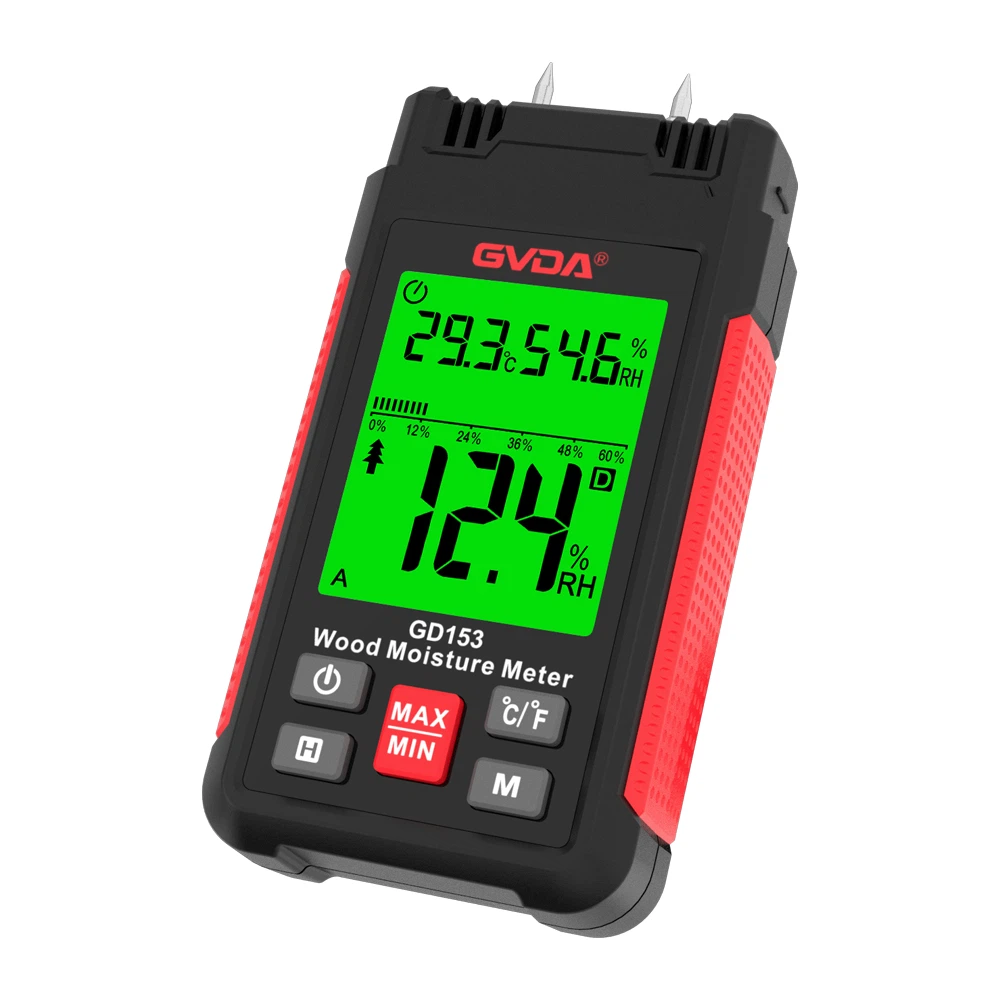
Wood Moisture Meters - Why Flooring Installers Need Quantitative Moisture Readings
Another industry that benefits from quantitative moisture measurement is the flooring industry. Wood flooring installers often need accurate measurements of the moisture content of the wood they are working with as well as an accurate assessment of the relative humidity (RH) at the installation site conditions.
Why is it so important to make quantitative moisture measurements? The main reason is that, as a hygroscopic material, wood tends to absorb or release moisture until it reaches equilibrium with its environment. This is known as the Equilibrium Moisture Content (EMC) of the wood, and this value can vary from one job site to another, so flooring installers need to check the RH conditions of their wood and each job site.
If wood flooring is installed too far from the EMC value of the current installation location, many failures can occur, including:
Discolouration. In some wood floors, moisture can cause dark or faded spots to appear. This spoils the appeal of the floor and can be a precursor to other flooring failures.
Warping. As the wood begins to absorb moisture, the wood will begin to warp and pull away from under the floor. In most cases, the spacing is minimal. However, in some rare and extreme cases where there is an external source of moisture, the wood may completely separate from the floor.
Coronation. When the centre of a piece of wood flooring has more moisture than the edges, the centre expands and forms a small bump. This is called "crowding".
Cupping. When there is more water at the edges of a board than in the centre, the edges may rise as the board expands. This may also cause the boards to squeeze against each other, creating a wavy appearance.
Persistent water condensation. As wood flooring releases excess water, it may condense on the surface of the wood.
For flooring installers, any of these issues can cause callbacks, which involves wasting a lot of time, labour and resources replacing damaged wood flooring.
For this reason, it is important to take quantitative moisture measurements of the %MC of your wood flooring. Also remember: it is important to make quantitative measurements of RH conditions at the job site to help determine the EMC of the wood.
Note: Because wood flooring installers can work with a wide variety of woods, it is not sufficient to have a "wood moisture meter". Different types of wood will give different readings even at exactly the same moisture content. Therefore, if the goal is to achieve a quantitative moisture measurement, it is important to take into account corrections for the type of wood. Some high-end wood hygrometers have built-in species correction, while other users need to make manual adjustments using a species correction chart.