10 Factors That Can Affect Magnetic Coating Thickness Gauge Measurements
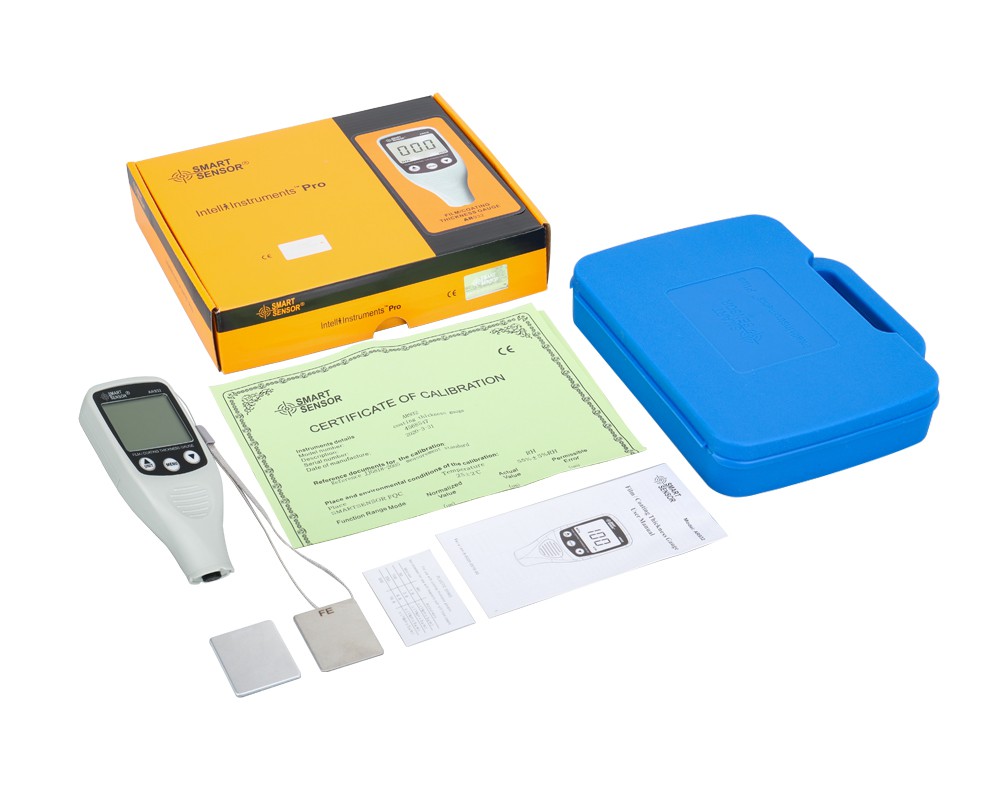
The magnetic coating thickness gauge is a new product developed and is a small portable instrument. The magnetic coating thickness gauge is also called a coating thickness gauge, a coating thickness gauge, and a coating thickness gauge.
In order to facilitate customers to use the coating thickness gauge, the following factors affecting the measurement of the magnetic coating thickness gauge are summarized as follows:
1. Changes in the magnetic properties of the base metal. In order to avoid the influence of heat treatment, cold working and other factors, the instrument should be calibrated on the iron substrate with the same properties as the plated metal.
2. Measure the thickness of the base metal. The base metal has a certain critical thickness. If the thickness is exceeded, the measurement will not be affected by the thickness of the base.
3. For edge effects, it is not acceptable to measure near the edge or inner corner of the test piece. The proofreading test piece should be placed in the middle of the test piece to reduce errors.
4. Measure the curvature of the specimen. The curvature of the specimen has an influence on the measurement, and this influence increases obviously as the radius of curvature decreases. Therefore, it should not be measured on the curved surface of the test piece exceeding the allowable radius of curvature.
5. The surface roughness of the measured object, base metal and surface roughness will affect the measurement. As the roughness increases, the influence increases. Rough surfaces can cause both systematic and accidental errors. For each measurement, increase the number of measurements at different positions to overcome this accidental error. If the base metal is rough, it is necessary to take several positions on the uncoated base metal test piece with similar roughness to calibrate the zero point of the instrument; or use a non-corrosive solution to remove the covering layer on the base metal, and then calibrate the zero point of the instrument.
6. Magnetic field. The magnetic field around the measured object will interfere with the magnetic measurement and affect the accuracy of the coating thickness gauge.
7. Adhesive substances, the instrument is sensitive to those attached substances that prevent the probe from being in close contact with the surface of the covering layer. Therefore, the attached substances must be removed to ensure that the probe is in direct contact with the surface of the covering layer.
8. The placement of the probe during the measurement process, the way the probe is placed has an impact on the measurement, and the probe is kept perpendicular to the surface of the sample during the measurement. This is a problem that should be paid attention to in the measurement of coating thickness gauges (other thickness gauges, such as ultrasonic thickness gauges).
9. The deformation of the test piece and the error of the test piece itself, the probe deforms the soft covering layer test piece, so there will be certain errors on these test pieces.
10. The number of measurements. For measurements with high data requirements, multiple measurements should be carried out to obtain the average value. For those with higher precision requirements, multiple instruments can be used to obtain the average value.