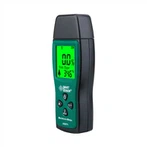
Acidity gauge PH gauge Steps for measuring PH values
ONE, preparation work
1. The acidity meter should be placed flat on a workbench suitable for the use environment, and the bracket should be supported according to the visual angle.
2. Positioning measurement method of pH value: (1) Two-point positioning method (high-precision measurement method) (1) Connect the electrode line, move the reference electrode and the clean pH electrode that has been activated for more than 24 hours into the first standard buffer pH1 (e.g. pH1=4.00), after the instrument responds stably, adjust the positioning knob until the instrument displays "0.00"; (2) Take the electrode system out of the first standard solution, rinse it with deionized water and clean it with filter paper Blot up the water on the surface of the electrode, and transfer it into the second standard solution (for example, pH2=9.18). After the instrument responds stably, adjust the slope knob to make the pH meter display (△pH=pH1- pH2=9.18-4.00=5.18) Afterwards, the slope knob cannot be moved again unless the electrode system is replaced; (3) After the slope adjustment is completed, re-adjust the positioning knob so that the instrument displays the actual pH value of the second standard solution (9.18), and the 2-point positioning is over; (4) Take the electrode out of the second standard solution, wash it, blot it dry, and put it into the solution to be tested. After the instrument responds stably, the displayed value is the pH value of the solution to be tested. (2) One-point positioning method (rough measurement method) (1) Adjust the temperature compensation knob to the solution temperature value; (2) Rotate the slope compensation knob to the left; (3) Move the electrode system into the standard solution (one point The method uses only one standard solution, such as pH=4.00), adjust the positioning knob to make the instrument display "4.00"; (4) take out the electrode, rinse and dry it, then move it to the solution to be tested, the value displayed after the instrument responds stably is the pH value of the solution to be tested.
TWO, temperature measurement
1. Turn the function selection to the temperature file.
2. Insert the temperature probe into the socket, and place the temperature probe in the environmental conditions or solution. After the instrument responds stably, the displayed value of the instrument is the environmental condition or solution temperature value.
THREE、Precautions
1. Do a good job of preparing the instrument before use.
2. After the acidity meter is powered on or the display is unstable or jumps randomly during the measurement process, the power should be cut off for inspection, such as whether the voltage, warm-up time and electrode system are normal.
3. When using different electrodes, care should be taken to eliminate the interference of ions, select a good salt bridge, and use an ionic strength fixative if necessary.
4. Before removing the electrode system from the first solution and transferring it to the second solution, it must be cleaned with deionized water or double distilled water, and then the surface moisture should be blotted dry with filter paper, so as not to affect the accuracy of the measurement results.
5. The instrument should be stored in a dry, clean and non-corrosive place. After each measurement, the power should be turned off, and the electrode and temperature probe should be withdrawn and stored properly. After the glass electrode is cleaned, it can be immersed in deionized water for use (note that the water level should not be lower than the glass bulb). After the calomel electrode is cleaned, put a rubber cap on it and store it in a matching box. And when the salt bridge is interrupted, the saturated filling fluid should be replenished in time.
6. These instruments all use large-scale integrated circuits with high input resistance. When repairing and welding any parts inside the instrument, you should use a soldering iron with a good ground wire below 45W. If there is no ground wire, you should unplug the power plug welding.