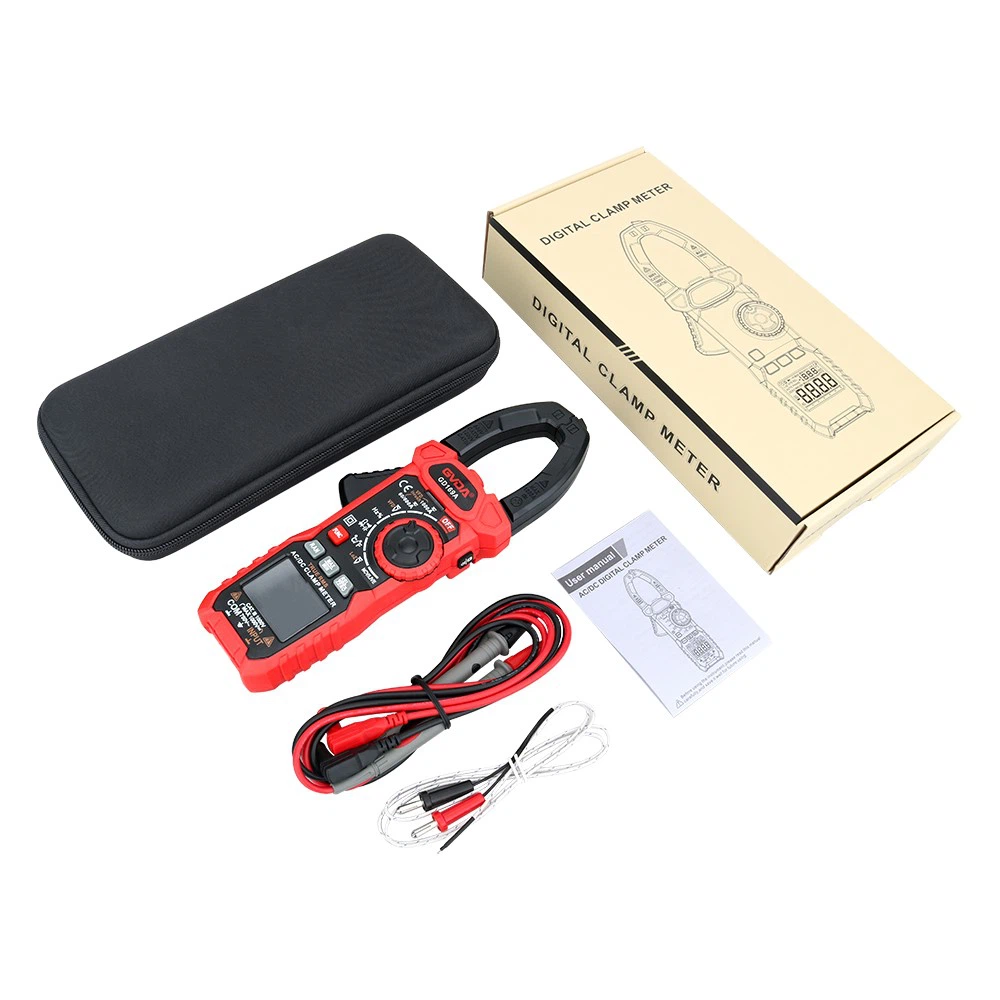
Clamp meter measurements on motors and drives:
Loading: The motor sink current measured as the average of the three phases should not exceed the motor's full load current rating (multiplied by the allowable overload factor). On the other hand, motors with load currents below 60% of full load current (and most do) are increasingly inefficient and power factor drops.
Current balance: A current imbalance may indicate a problem with the motor windings (for example, different resistances across the field windings due to an internal short circuit). In general, the imbalance should be below 10%. (To calculate unbalance, first calculate the average of the three phase readings; then find the maximum deviation from the average and divide by the average.) Extremely high current unbalance is a single phase when one of the three phases has no current. out of balance. This is usually caused by a blown fuse.
Inrush current Motors that are directly press-started (via a mechanical starter) have an inrush current). The inrush current can reach approximately 500% on older motors and up to 1200% on energy-efficient motors. If the inrush current is too high, it will often cause a voltage dip and a nuisance trip. **The clamp meter has a "surge" function that triggers on a surge current and captures its true value.
Peak Loads (Shock Loads): Some motors experience shock loads that can cause a current surge sufficient to trip the overload circuit in the motor controller. Imagine running into a hard-knotted chainsaw. The MIN/MAX function can be used to record the worst case current drawn by the shock load.
Test leakage current:
To check for leakage current on a branch circuit, place the live and neutral wires in the jaws of the clamp meter. Any current measured is leakage current, that is, current returning to the ground return. The supply current (black line) and return current (white line) generate opposing magnetic fields. The currents should be equal (and in opposite directions), and the opposing magnetic fields should cancel each other out. If there is no cancellation, it means that some current (called leakage current) is returning from another path, and the only other path is the ground loop. If you detect a net current between the supply current and the return current, you need to consider the nature of the load and circuit. A miswired circuit can allow up to half the total load current to flow through the ground system. If the measured current is very high, there is most likely a wiring problem. Leakage currents can also be caused by load leakage or insulation damage.
Worn windings in the motor or moisture in the clamping mechanism are common culprits. If you suspect a leak, a disconnect test with a megohmmeter will help assess the integrity of the circuit's insulation and help determine if and where there is a problem.