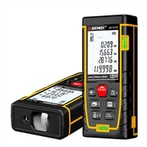
Clamp meter operation steps
When using a clamp ammeter to measure current, it is necessary to clamp a tested wire (wire) If two parallel lines are inserted, the current cannot be detected In addition, when using a clamp ammeter center (iron core) for detection, the detection error is small When checking the power consumption of household appliances, using a line separator is more convenient. Some line separators can amplify the detection current by 10 times, so currents below 1A can be amplified before detection When using a DC clamp ammeter to detect DC current (DCA), if the current flows in the opposite direction, it will display a negative value This function can be used to detect whether the car's battery is in a charged or discharged state
True effective value detection
The clamp ammeter with average value method detects the average value of sine wave through AC detection, and displays the amplified value after 1.11 times (sine wave AC) as the effective value The waveforms other than sine waves and skewed waves with different waveform rates are also amplified 1.11 times and displayed, resulting in indication errors Therefore, when detecting waveforms and distortions other than sine waves, please use a clamp ammeter that can directly test the true effective value
Leakage detection
Leakage detection is different from typical current detection, as two (single-phase 2-wire type) or three (single-phase 3-wire type, three-phase 3-wire type) wires need to be clamped together. The grounding wire can also be clamped for testing The insulation management method for detecting leakage current on low-voltage circuits has become the primary means of judgment Since its confirmation by the 1997 revision of electrical equipment technical standards, leakage current clamp meters have gradually been used for detection in buildings and factories that cannot be powered off