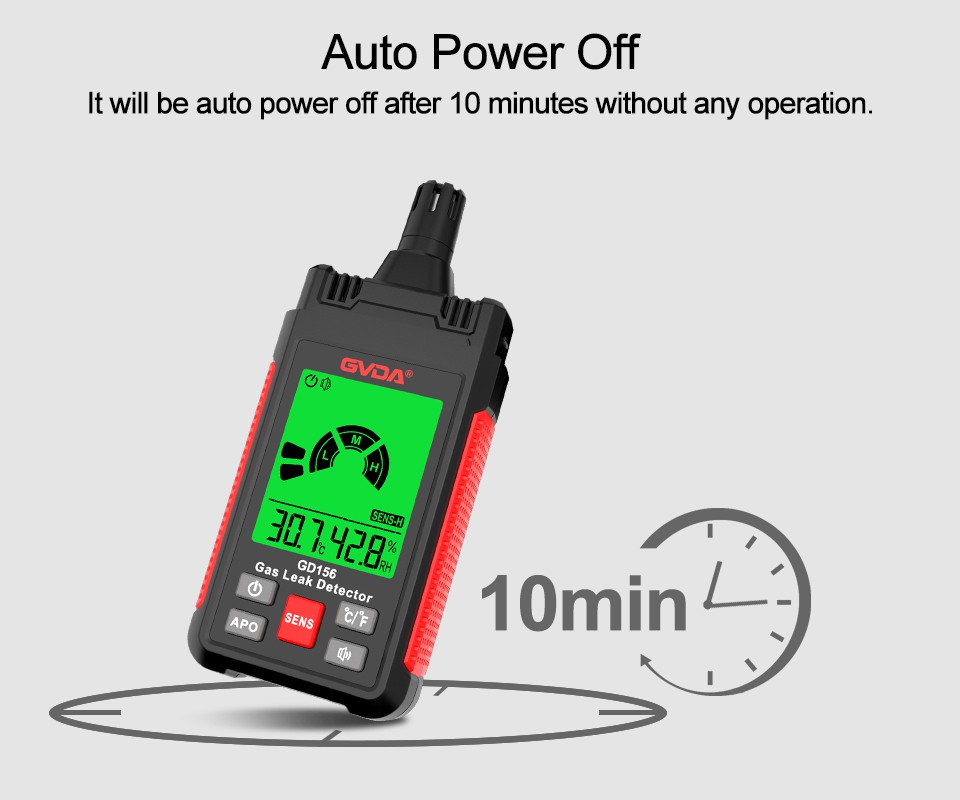
Gas sensors can be classified into three major categories based on their working principles:
Gas sensors utilizing physical and chemical properties, such as semiconductor based (surface controlled, volume controlled, surface potential based), catalytic combustion based, solid thermal conductivity based, etc. Gas sensors utilizing physical properties such as thermal conductivity, optical interference, infrared absorption, etc. Gas sensors utilizing electrochemical properties, such as constant potential electrolysis, galvanic cell, diaphragm ion electrode, fixed electrolyte, etc. According to the hazards, we classify toxic and harmful gases into two categories: combustible gases and toxic gases. Due to their different properties and hazards, their detection methods also vary.
Combustible gases are hazardous gases commonly encountered in industrial settings such as petrochemicals, mainly consisting of organic gases such as alkanes and certain inorganic gases such as carbon monoxide. The explosion of combustible gases must meet certain conditions, which are: a certain concentration of combustible gas, a certain amount of oxygen, and a source of fire with sufficient heat to ignite them, a humidity sensor probe, a stainless steel electric heating tube, a PT100 sensor, a fluid solenoid valve, a cast aluminum heater, and a heating coil. These are the three elements of explosion (as shown in the explosion triangle in the left figure above), which are indispensable. In other words, the absence of any of these conditions will not cause a fire or explosion. When combustible gases (steam, dust) and oxygen are mixed and reach a certain concentration, they will explode when exposed to a fire source with a certain temperature. We refer to the concentration at which combustible gases explode when exposed to a source of fire as the explosive concentration limit, abbreviated as the explosive limit, which is generally expressed in%.
In fact, this mixture does not necessarily explode at any mixing ratio and requires a concentration range. The shaded area shown in the figure on the right above. When the concentration of combustible gas is below LEL (minimum explosive limit) (insufficient combustible gas concentration) and above UEL (maximum explosive limit) (insufficient oxygen), no explosion will occur. The LEL and UEL of different combustible gases are different (see the introduction in the eighth issue), which should be taken into account when calibrating instruments. For safety reasons, we should generally issue an alarm when the concentration of combustible gas is at 10% and 20% of the LEL, where 10% LEL is referred to. Make a warning alert, while 20% LEL is called a danger alert. That's why we call the combustible gas detector LEL detector. It should be noted that the 100% displayed on the LEL detector does not indicate that the concentration of combustible gas reaches 100% of the gas volume, but rather reaches 100% of the LEL, which is equivalent to the lowest explosive limit of combustible gas. If it is methane, 100% LEL=4% volume concentration (VOL). In operation, the detector that measures these gases using the LEL method is a common catalytic combustion detector.
Its principle is a dual bridge (commonly known as a Wheatstone bridge) detection unit. A catalytic combustion substance is coated on one of the platinum wire bridges. Regardless of the flammable gas, as long as it can be ignited by the electrode, the resistance of the platinum wire bridge will change due to temperature changes. This resistance change is proportional to the concentration of the flammable gas, and the concentration of the flammable gas can be calculated through the instrument's circuit system and microprocessor.