Guide to Selecting Toxic and Hazardous Gas Detectors
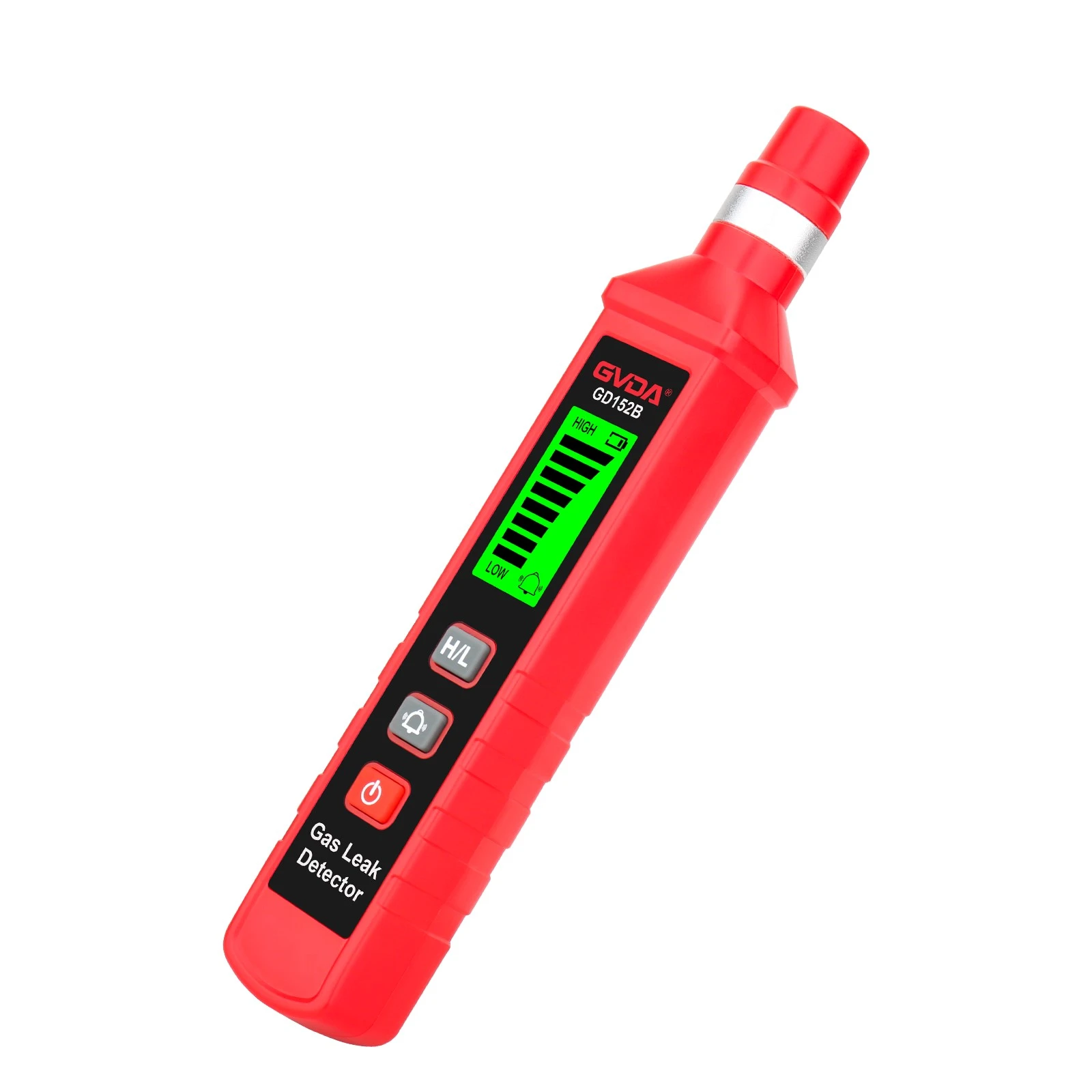
Against the backdrop of deteriorating living environments and worrying environmental conditions, coupled with the measures adopted for the vigorous Blue Sky Campaign to curb pollution, monitoring of toxic and hazardous gases has become far stricter than before. Workplaces and manufacturers involving toxic and hazardous gases have strengthened internal control, and gas concentration detectors and gas monitoring alarms have become essential equipment. A gas detector is an instrument used to detect the concentration of gas leaks, including portable gas detectors, handheld gas detectors, fixed gas detectors, online gas detectors and other types.
Current toxic and hazardous gas detectors adopt advanced imported electrochemical sensors from Germany or the United States. They operate on the well-established controlled-potential electrolysis principle. An electrolytic cell contains three electrodes: a working electrode, a counter electrode and a reference electrode, with a certain polarization voltage applied. By replacing the sensor for different gases and adjusting the polarization voltage, various toxic and hazardous gases can be measured. The target gas passes through the membrane to reach the working electrode, where redox reactions occur. The sensor then outputs a tiny electric current proportional to the concentration of the toxic and hazardous gas. This current signal is sampled and converted into a voltage, which is amplified and subjected to voltage-to-current conversion. Finally, the gas concentration within the detector's measuring range (ppm value) is output as a standard 4–20 mA signal.
Structure and working principle of combustible gas detectors: They adopt a new-generation low-power, high-anti-interference catalytic bead element, which forms a detection bridge circuit together with two fixed resistors. When combustible gas in the air diffuses to the surface of the sensing element, catalytic reaction takes place on its surface. The magnitude of the generated voltage signal is proportional to the concentration of the combustible gas. After amplification and voltage-to-current conversion, the full measuring range within the lower limit of combustible gas (ppm or LEL) is converted into a standard 4–20 mA signal for output.
The oxygen sensor in oxygen gas detectors follows the galvanic cell principle. The cell contains a lead anode and a silver cathode, isolated from the outside by a membrane. When oxygen-containing gas in the air permeates the membrane and reaches the cathode, the signal is amplified and converted via voltage-to-current transformation. The oxygen content within the measuring range (0–30% by volume) is output as a standard 4–20 mA signal.
These are the commonly adopted working principles of gas detectors. With this knowledge, users may select suitable equipment according to factory conditions and working environments. Gas detectors are widely applied across sectors including agriculture, chemical industry, construction, electric power, fire protection, natural gas, general industry, hazardous materials handling, iron and steel, petroleum and petrochemicals, wastewater treatment, pharmaceuticals, food processing, water treatment and tobacco manufacturing.
Gas detectors enjoy an increasingly broad scope of application. In the pharmaceutical industry, they are mainly used to monitor various volatile organic compounds. Since many raw materials and intermediates are toxic chemicals or flammable and explosive substances, pharmaceutical plants, similar to chemical factories, need to monitor leaks of toxic, hazardous, flammable or explosive gases during production.
In the food industry, gases such as ClO₂, CO₂ and O₂ are used in sterilization, preservation and other processes. At these work sites, corresponding fixed gas detectors are deployed to measure gas concentration for process control or leak monitoring. In addition, gas detectors are widely used in the pesticide industry, semiconductor manufacturing, customs inspection and other fields.